
The term "Undetectable" means someone is living with HIV but the amount of virus in the body (viral load) is so small that it does not show up with testing. Someone living with HIV can have an “undetectable” viral load when they take antiretroviral treatment (ART) properly and regularly over time. When someone remains at an undetectable level, HIV cannot be passed to others through sex.
HIV
HIV stands for Human Immunodeficiency Virus. HIV is a virus that weakens the immune system, making it harder for the body to fight off infections. Over time, this can cause people to become sick or seriously ill. Without treatment, it can lead to Acquired Immune Deficiency Syndrome (AIDS).
HIV is still not a “curable” infection, meaning once someone gets it, they will have it for life. HIV can be managed with treatment that can help people stay healthy and prevent them from spreading HIV to others.
You can have HIV without knowing it. That’s why it’s important to get tested.
What does "Undetectable" mean?
Many people will notice mild symptoms about two to four weeks after becoming infected. Sometimes people don’t notice any symptoms, or they assume their symptoms were from something else.
Early symptoms can include:
- Fever
- Swollen lymph nodes
- Sore throat
- Muscle aches
- Body rash
- Night sweats
- Tiredness (fatigue)
- Nausea
- Diarrhea, and/or
- Generally feeling unwell (malaise)
These symptoms go away on their own without treatment, but the infection is still there.
After years of untreated HIV, people may notice symptoms of:
- Unexplained weight loss
- Enlarged lymph nodes
- Dry cough
- Shortness of breath
- Sores on the skin
- Recurrent yeast infections
- Other unusual symptoms
The HIV virus can be spread by contact with:
- Blood
- Semen (including pre-ejaculate)
- Vaginal fluids
- Rectal fluids
- Breast milk
In Canada, the most common ways that HIV is spread are:
- Anal or vaginal sex without a condom
- Sharing needles/syringes used to inject drugs, including steroids
HIV can also be passed from person to person by:
- Sharing sex toys
- Sharing other drug use equipment like cookers, filters, pipes, etc.
- Sharing equipment for tattooing, body piercing or body modifications
- Sharing acupuncture needles
- During pregnancy, childbirth or breast/chestfeeding
- During other situations, such as sexual assault
HIV Prevention
How can I protect myself from HIV?
- Always use a condom (internal or external) when you have vaginal/front hole or anal sex.
- If you share sex toys, cover the toy with a new condom and clean properly after each use.
- Use water-based or silicone-based lubricants. This helps to prevent condoms from breaking and prevents small tears in the vaginal or anal tissue that make it easier for the HIV virus to enter.
- Get tested for all STIs regularly: Having other infections like chlamydia, gonorrhea, or syphilis can make it more likely that you will get HIV if you are exposed to it.
- Look into HIV PrEP and PEP to decide if these are right for you.
If you use substances, including steroids:
- Use new equipment every time you use, including needles, syringes, pipes, cookers, filters, and all other supplies.
- Never share equipment with other people, including your sex partner(s).
- Visit local Needle and Syringe (NSP) programs for safer substance use supplies and information.
PrEP
PrEP stands for Pre-Exposure Prophylaxis. PrEP is a medication that people without HIV can take to prevent getting HIV. When taken daily, can significantly reduce the risk of HIV transmission in people who are HIV negative.
How does it work?
PrEP stops HIV from growing in the body and causing an infection if there is contact with HIV.
People who take PrEP must take it as prescribed (sometimes every day) and follow up with the healthcare provider regularly.
Why take PrEP
PrEP is powerful HIV prevention tool. It has been shown to be as high as 99% effective at reducing the risk for HIV when taken properly. PrEP offers even greater protection when used with condoms and other prevention methods.
PrEP does not protect against other sexually transmitted infections, and it is not a cure for HIV.
Where to get PrEP
Can be accessed at the sexual health clinic by booking an appointment: 705-474-1400, ext. 5289.
PrEP can also be accessed through some online clinics in Ontario, including:
Frequently asked questions about PrEP, including a tool to help find other PrEP clinics, can be found at OntarioPrEP.ca.
PEP
If you think you were exposed to HIV, it is important to get PEP to prevent infection.
What is PEP?
PEP stands for Post-Exposure Prophylaxis. It's given to people without HIV after being exposed to the virus. PEP can prevent HIV infection.
Where to get PEP
You can get PEP at the hospital Emergency Department. It should be within 72 hours after you were exposed to HIV. PEP is taken daily for 28 days.
HIV testing
Most people should get tested for HIV at some point in their life. If you have ever experienced any of the situations listed in “How does HIV spread?” or think you might have been exposed to HIV another way, consider getting tested if you haven’t already.
It can take six weeks to three months for HIV to show up on a test after you were exposed to it, depending on the type of test you had, so get tested again after this time frame if your first result was negative.
How often you should get tested depends on several factors. Some people should consider testing as often as every three months, while others may only need to test once per year. Your health care provider or the nurses in the Sexual Health Clinic can help you figure out how often you should get tested.
Getting tested is the only way to know your HIV status. Knowing if you are “positive” or “negative” will help you make the best decisions to protect your health and the health of others.
Testing for HIV can be done in several ways:
- A health care provider can order the test for you. They will either collect a blood sample from you or send you to a lab. You can get tested through:
- Your family health care provider
- A walk-in/virtual clinic
- A provider you see at other health services like Nursing Stations or Addiction Treatment Centres
- The Sexual Health Clinic has a variety of testing options:
- In-person appointment at our North Bay or Parry Sound office
- Phone appointment with blood collected at a lab of your choice
- Anonymous HIV testing
- Rapid HIV testing
- GetaKit.ca offers two options for HIV testing:
- Self-test kits - These can be mailed to your home or picked up at select locations.
- Lab requisitions - A paper requisition will be mailed to your home. You take this to a local lab to have your blood drawn for HIV testing.
Other types of blood work do not automatically test for HIV. You must ask the health care provider for this test.
What happens if I test positive?
If you test positive, your health care provider and a public health nurse will reach out to you to talk about the result and help with next steps. You will be referred to a clinic that specializes in HIV treatment to get started right away.
The public health nurse will help you:
- Figure out if any of your partners need to be notified. This can include sexual and/or drug equipment sharing partners.
- Notify your partner(s). Your name or personal health information will not be shared with those partner(s).
- Get information about HIV, provide support and link you with other community services.
If you had a positive result with a self-test, you will need to contact us to speak with a public health nurse. Call 705-474-1400 ext. 5289 or toll-free at 1-800-563-2808 Ext. 5289.
If you tested through GetaKit.ca, please go to their website to submit your result. A member of their team will reach out to you.
Local Services
Our Sexual Health Clinic offers free rapid and/or anonymous testing. Call us to book: 1-800-563-2808 Ext. 5289.
If you are living with HIV and are looking for support, please visit www.hiv411.ca.
Get free condoms from:
- AIDS Committee of North Bay & Area (147 McIntyre St. W, Suite 102, North Bay)
- Our Parry Sound office (90 Bowes St., Unit 201, above Shoppers Drug Mart)
- Our North Bay office (345 Oak Street W.)
Additional Resources
2025 Campaign Materials

Local Statistics for HIV
Incidence rate is the number of new cases of a disease divided by the number of persons at risk for the disease during a particular time period.
Cases:
5*
Incidence rate per 100,000 in 2024: 3.6
*Includes confirmed cases in 2024.
Incidence Rate per 100,000 of HIV by Year
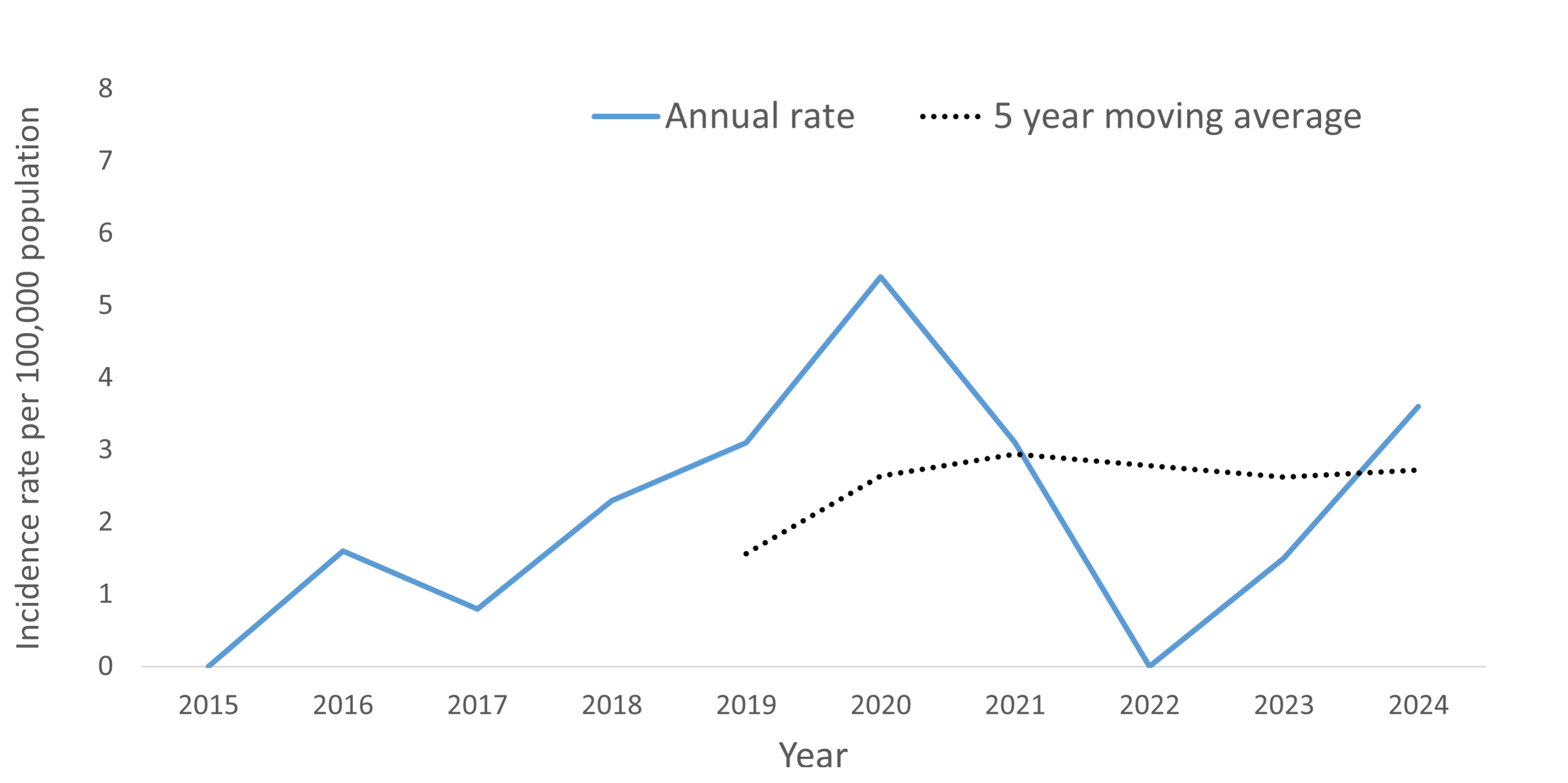
- Case counts: Public Health Ontario. Query: Case counts of reportable diseases by public health unit and year. Toronto, ON: Ontario Agency for Health Protection and Promotion; extracted on April 23, 2024.
- Population estimates: Statistics Canada 2014-2022, IntelliHEALTH Ontario, Ministry of Health, extracted on January 16, 2025.
- Population projections: Statistics Canada, 2023, IntelliHEALTH Ontario, Ministry of Health, extracted on April 23, 2024.


