Food and the Environment

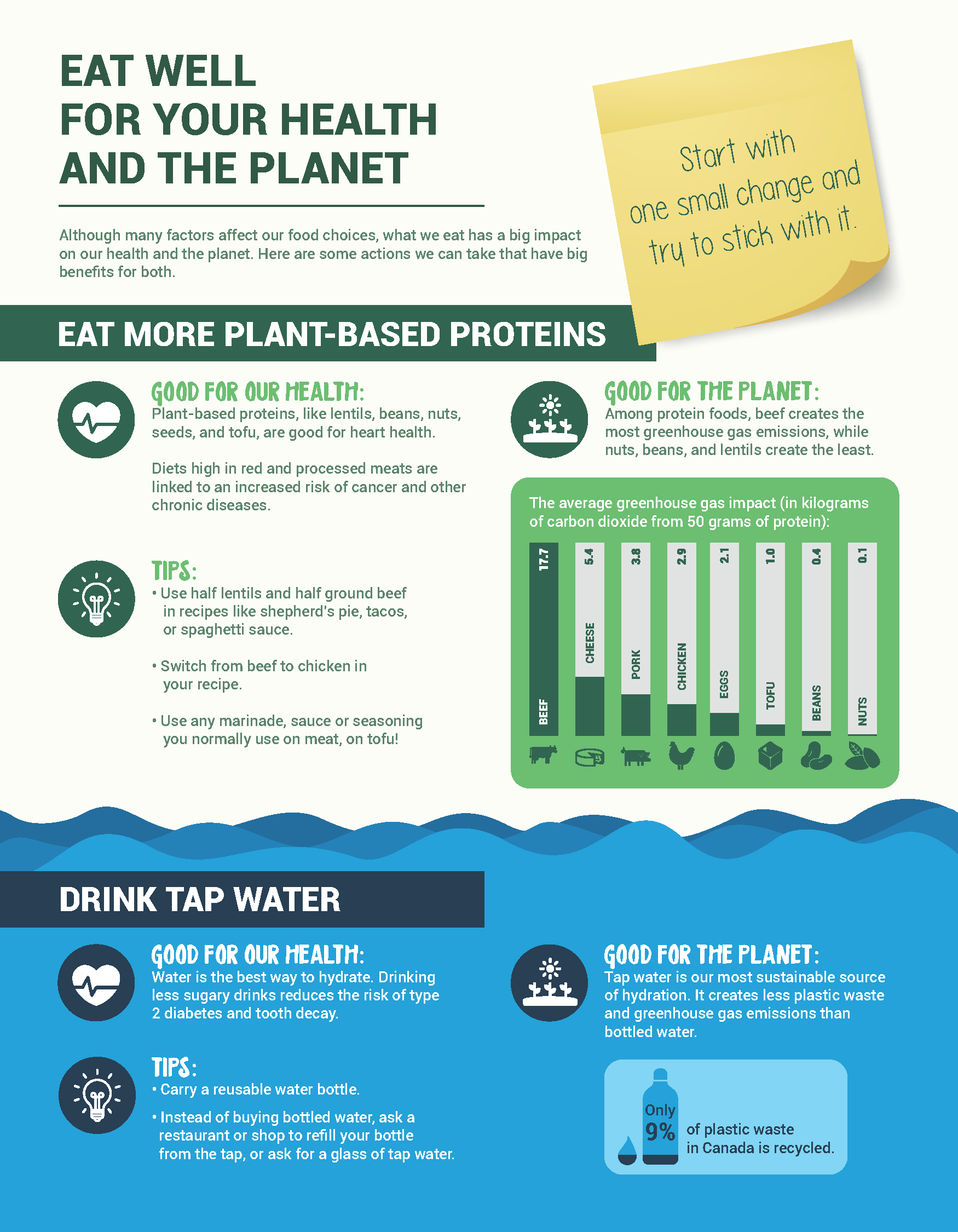
What we eat has a large impact on our environment. Our global food system is responsible for 25-30% of total greenhouse gas emissions. This includes growing and producing food, as well as processing, packaging and transporting foods all over the world.

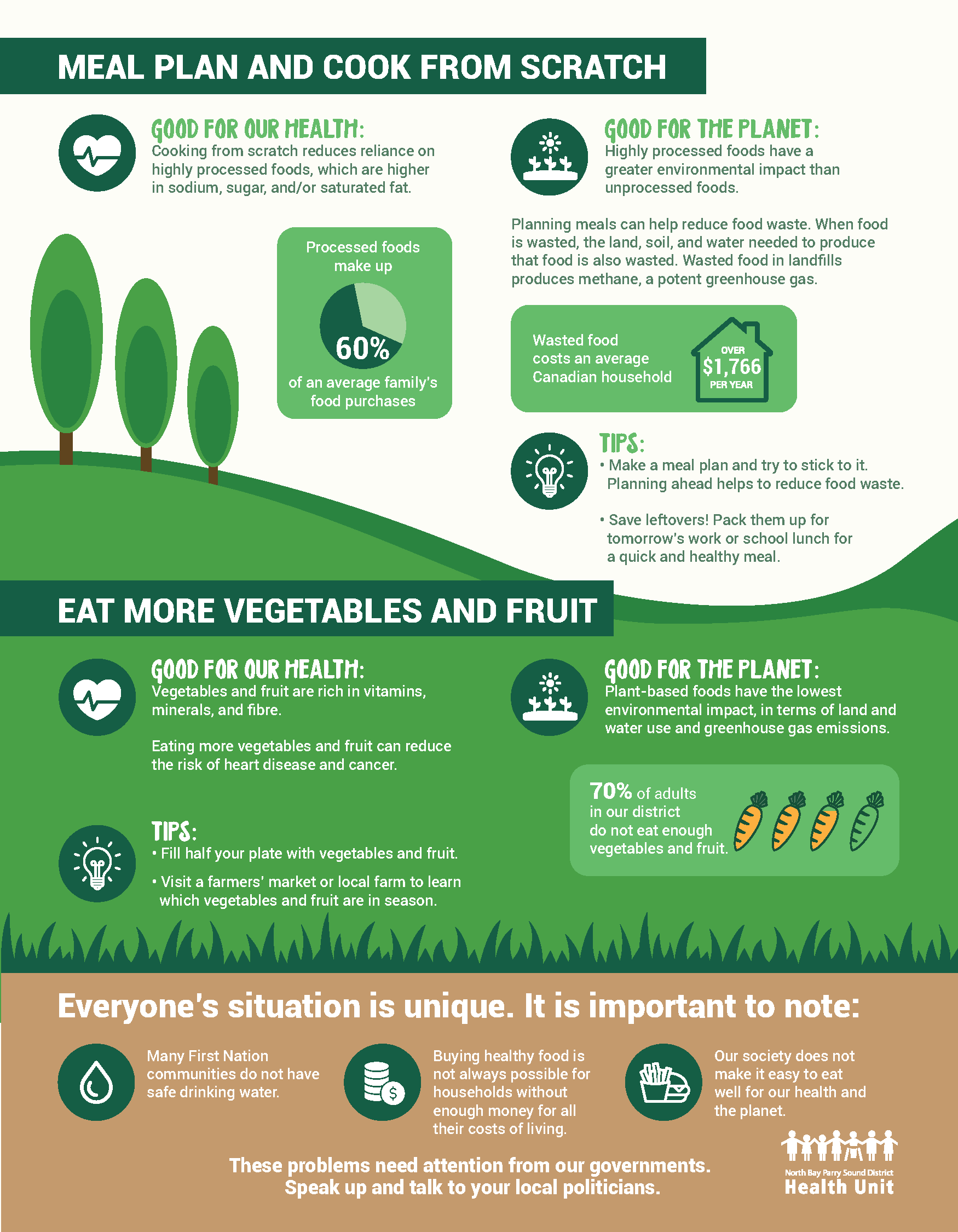
Since everyone eats, we are all part of this food system. That means we can also make food choices that help our planet. Luckily, many foods that support our health are also climate friendly.

Food choices make a big impact on your health and the environment. It can be overwhelming to think about, but start where you can. Pick one small change and try to stick with it.

Image with tips for environmentally conscious eating

Image with tips for environmentally conscious eating

What is composting?

Composting is a biological process where organic matter (e.g., fruit and vegetable scraps, paper, dry leaves) decomposes into a soil-like product called ‘compost’. Compost is enriched with key nutrients that many plants and other organisms require.

Why is composting important?

  • Composting recycles 30 – 50% of organic matter from household garbage and reduces waste that ends up in the landfill. This reduces greenhouse gas emissions overall and helps to minimize environmental impact.
  • Composting demonstrates commitment to addressing climate change and using socially accountable and sustainable organizational practices.  
  • Protecting the land and water in this area is also part of our obligation as signatories of the Robinson-Huron Treaty of 1850. Many Indigenous scholars and activists have stated that reconciliation starts with the land and water, who have been colonized in the same way as people.
  • Actions to mitigate climate change and land/water degradation align with the United Nations Declaration on the Rights of Indigenous Peoples (UNDRIP). UNDRIP is a human rights framework that sets out the rights of Indigenous peoples around the world.

Composting Tips

  • Alternate adding layers of brown and green material.
  • When adding a food layer of green material, add some brown material on top.
  • Leave air space in the compost and turn every week or two. The microorganisms living in the compost need oxygen to help decompose the organic matter.
  • See troubleshooting tips in Composting do’s and don’ts.

Composting Poster

More information on Composting:

Love Food Hate Waste: This campaign hopes to inspire and empower people in Canada to make their food go further and waste less.

Canada’s Food Guide: This website has information and tools about meal planning, cooking, and choosing healthy foods.

Rock What You’ve Got: This online cookbook has lots of recipes to help prevent food waste.

Wasteless Resources: This webpage provides downloadable resources for households to reduce food waste, including a grocery list, weekly meal planner, and freezer inventory tracker.

  • Food Matters Action Kit: This toolkit aims to inspire youth across North America to reduce food waste and help save our planet.
  • EcoSchools Canada: This environmental education and certification program for grades K-12 helps school communities develop both ecological literacy and environmental practices to become environmentally responsible and reduce the environmental footprint of schools.
  • BrightBites: Explore the Save the Planet school food climate topic page, for ideas to help students learn environmentally friendly solutions, habits and skills related to food.

Contact Us

North Bay Parry Sound District Health Unit

North Bay
345 Oak Street West

Parry Sound
90 Bowes St, 2nd Floor, Suite 201

Phone 705-474-1400
Toll Free 1-800-563-2808
contact@healthunit.ca