Gambling

What is gambling?

Gambling is when you bet something of value on an outcome of an event, with the desire to win something of more value. You don’t know if you will win or lose.

Examples of gambling:

  • lottery tickets and raffles
  • scratch tickets and instant games
  • slot machines
  • bingo
  • online or in-person casino games
  • playing cards or dice for money
  • sports betting or pools
  • betting with friends

All forms of gambling contain an element of luck. Slot machines, for example, require no skill and are solely based on luck, whereas table games, such as poker or blackjack, require a degree of skill, as well as luck.

Many people believe inaccurate information about gambling and odds. Gambling is not a moneymaker and it is far less likely that you will win big than you may think.

Being informed is important for safe gambling.

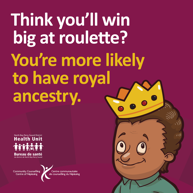
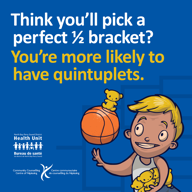
• Think You’ll win big at roulette? You’re more likely to have royal ancestry • Think you’ll pick a perfect ½ bracket? You’re more likely to have quintuplets.
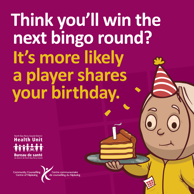
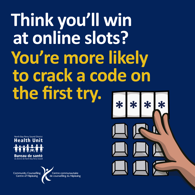
• Think you’ll win the next bingo round? It’s more likely a player shares your birthday. • Think you’ll win at online slots? You’re more likely to crack a code on the first try.
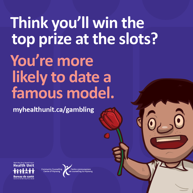
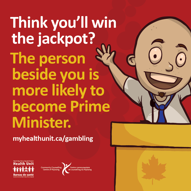
Think you'll win top prize at the slots? You're more likely to date a famous model. Think you'll win the jackpot? The person beside you is more likely to become Prime Minister.
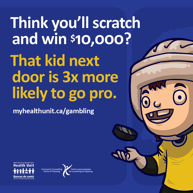
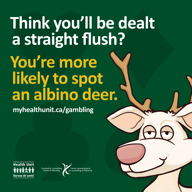
Think you'll scratch and win $10,000? That kid next door is 3X more likely to go pro. Think you'll be dealt a straight flush? You're more likely to spot an albino deer.

Français

The Health Unit would like to thank Dr. Jeffery Rosenthal, Professor of Statistics at the University of Toronto for assisting with the comparative odds included in this campaign. Dr. Rosenthal is the author of Struck by Lightning: The Curious Work of Probabilities and Knock on Wood: Luck, Chance, and the Meaning of Everything.

This campaign is done in collaboration with the Community Counselling Centre of Nipissing.

Gambling for fun is not a problem, but gambling becomes a problem when it causes problems.

Problem gambling happens when a person starts to lose control of their gambling behaviour. Gambling becomes a kind of obsession, and is no longer fun. When this happens, a person and their loved ones can experience serious harms and consequences related to finances, work, relationships, as well as mental and physical health.

People of all ages, income levels, backgrounds and cultures can be affected by problem gambling. Problem gambling can happen suddenly or over the course of many years. It can develop for a number of different reasons with many factors, such as difficult life circumstances or trying to win back money lost.

Risk Factors for Problem Gambling

Certain factors can make a person more at risk of problem gambling, such as:

  • gambling at a young age
  • a previous big win
  • problem gambling in the family
  • holding misconceptions about the odds of winning
  • easy access to gambling
  • cultural gambling norms
  • impulsive or risk-taking behaviour tendencies
  • a history of mental health issues, such as depression, anxiety or substance use
  • a lack of knowledge about gambling
  • positive attitudes towards gambling
  • a stressful life event (e.g., divorce, retirement, job loss or a loved one’s death)

Using gambling as a way to cope with stress, spending more money than you can afford, and keeping gambling behaviour a secret are a few signs that problem gambling may be occurring. Problem gambling will look different for each person, so CAMH put together a long list of potential signs, click on the link below:

https://kmb.camh.ca/ggtu/help

If you think you or someone you know may be experiencing negative impacts of gambling, this short quiz by CAMH will help you understand if gambling is harming your life and where to get help:

http://www.problemgambling.ca/gambling-help/PGSIscreener/Registration.aspx

Do you think gambling might have a negative impact on your life?

This short quiz by CAMH will help you understand if gambling is harming your life and where to get help:

http://www.problemgambling.ca/gambling-help/PGSIscreener/Registration.aspx

If you gamble, here are tips to help you play safe and lower your risk of gambling harm:

  • if you gamble, only do it for entertainment
  • avoid gambling when upset, stressed or in recovery
  • only bet with money you set aside for entertainment
  • never borrow money to gamble
  • set a dollar limit as well as a time limit each time you gamble and stick to these limits
    • many tools are available to help
  • learn how the game works before you bet, such as the rules and odds
  • expect to lose, and treat the money you lose as the cost of entertainment
  • avoid gambling under the influence of alcohol, cannabis, or other substances
  • break often
    • step outside or have something to eat
  • don’t chase losses
  • avoid thinking of gambling as a way to win money, everyone loses over time
  • balance gambling with other hobbies and activities
  • know where to access help

Gambling is a popular form of leisure activity, as most adults engage in gambling at least once in their life. While most people gamble occasionally or not at all, some people gamble more frequently.

Research shows that the main motivation of all gamblers is the desire and hope to win money or something of value. People also gamble as a form of amusement and excitement, to socialize, and to support worthy causes. Gambling can also be a coping mechanism or an emotional escape, which is a common trend amongst people who experience problem gambling habits.

CAMH

Self-Help Tools

  • online tool and mobile app to keep track of gambling and urges
  • interactive tools to help you cut down or stop gambling
  • quiz to help understand the impact gambling is having on your life
  • community forum
  • self-help interactive exercises for family and friends
  • guides and handbooks for individuals, families, and organizations

Responsible Gambling Council

Cost2Play Calculator

  • online tool and mobile app to keep play safer by showing gambling spending

OLG

Self-exclusion Program

  • voluntary program that helps you to take a break from gambling

Below is a list of professional services and tools available to support you:

  • ConnexOntario: 1-866-531-2600 to find local mental health, addiction, and problem gambling services, available 24/7
  • Gambler Anonymous - North Bay: 705-497-6431 for more information about the support group for gambling addictions

Research and Campaign Results

Gambling Survey Results


Think You'll Win - Evaluation


Think You'll Win - Evaluation Version 2

Contact Us

North Bay Parry Sound District Health Unit

North Bay
345 Oak Street West

Parry Sound
90 Bowes St, 2nd Floor, Suite 201

Phone 705-474-1400
Toll Free 1-800-563-2808
contact@healthunit.ca