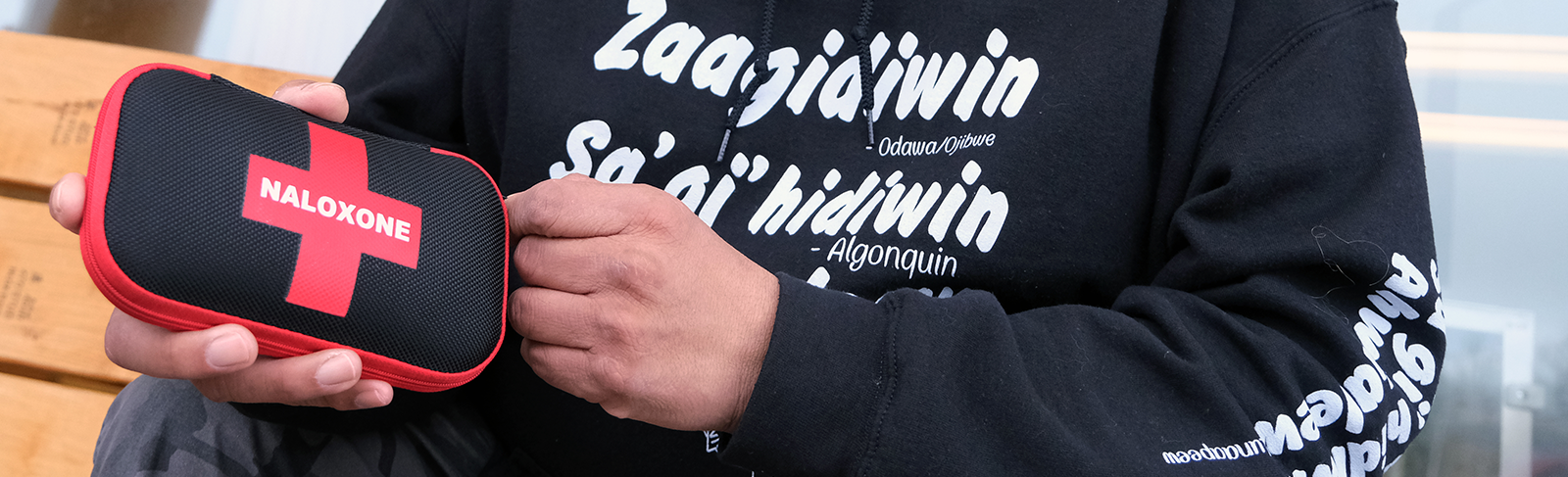


Naloxone, also known by the brand name Narcan©, is a safe medication that temporarily reverses the effects of an opioid overdose. It works by knocking the opioid off of the brain’s opioid receptors taking its place temporarily. Naloxone is a non-psychoactive drug, meaning individuals cannot abuse or get high from naloxone use.
Examples of opioids include drugs such as:
- heroin
- fentanyl
- morphine
- methadone
- codeine
- oxycodone
- carfentanil
Other substances can also contain opioids. A person may take more than one substance at a time.
Naloxone does not lead to increased substance use. In fact, some studies have shown that naloxone results in decreased use of opioids.
Getting Started with Naloxone
Anyone can use/administer naloxone. It is safe and easy to use.
If you're going to carry naloxone, you should have the training necessary to recognize the signs and symptoms of an opioid overdose, and understand what steps to take.
A short training is offered the first time naloxone is obtained at a participating agency and/or pharmacy. Refresher training can be requested as needed, and questions can be answered when getting more naloxone.
What forms does naloxone come in? |
| Naloxone comes in two forms in Ontario; an injectable form and a nasal spray form. Both types of naloxone are safe and effective in temporarily reversing an opioid overdose. |
What is included in a naloxone kit? |
Each nasal spray naloxone kit includes:
Each injectable naloxone kit includes:
Naloxone refills (i.e., medication only) are also available at many participating agencies and/or pharmacies. |
Where can I get a naloxone kit and training? |
|
Participating pharmacies in the Nipissing and Parry Sound districts provide naloxone training and naloxone training kits and/or refills to:
Use the locator map to see which pharmacies in your area currently distribute naloxone. You can also call 1-866-532-3161 Monday to Friday 8:30 a.m. to 5 p.m. to ask about naloxone distributors in your area. The following agencies in the Nipissing and Parry Sound districts provide naloxone training and naloxone kits and/or refills to:
Please note: Other agencies in the Nipissing and Parry Sound districts that train and distribute naloxone to clients ONLY, are not included in the list below. North BayAIDS Committee of North Bay and Area269 Main Street West Children's Aid Society457 Main Street West Community Counselling Centre of Nipissing361 McIntyre Street East North Bay Indigenous Friendship Centre980 Cassells Street North Bay Parry Sound District Health Unit345 Oak Street West West NipisssingGiyak Moseng - The Right PathCounselling and Prevention Services316 Ted Commanda Drive West Nipissing Community Health Centre68 Michaud Street West Nipissing General Hospital -Alliance Centre172 Ethel Street Parry Sound DistrictArgyle Nursing Station11851 ON-522 Britt Nursing Station991 Riverside Drive Canadian Mental Health Association87 Main Street 60 James Street, 2nd floor Esprit Place Family Resource Centre3A Beechwood Drive Pointe-au-Baril Nursing Station70 South Shore Road Rosseau Nursing Station17 Victoria Street West West Parry Sound Health Centre – Emergency Department6 Albert Street Whitestone and Area Nursing Station11 Church Street |
Can I pick-up naloxone if I am under the age of 16? |
| Yes, naloxone kits and/or refills (both nasal spray and injectable) can be provided to anyone who requests them so long as they meet each agency and/or pharmacy’s eligibility criteria. The Ministry of Health does not have an age restriction on who naloxone can be distributed to. |
How much naloxone can I pick up per visit at a participating agency and/or pharmacy? |
| The number of naloxone kits and/or refills that can be distributed per person per visit varies by agency and pharmacy. It is best to check with each individual agency and/or pharmacy about quantities distributed. |
What information do I need to provide when picking up naloxone? |
|
The type of information collected depends on where you pick-up naloxone. Some pharmacies may ask that you provide identification such as an Ontario Health Card although most do not. This allows pharmacies to seek reimbursement from the Ministry of Health for some of the costs related to offering naloxone. Other places that offer naloxone collect contact information so that they can be notified if the product they received is subject to a recall. Demographic information (e.g., age, gender, city/township/community) may also be collected to help identify trends related to naloxone distribution in the Nipissing and Parry Sound districts. All information collected is stored safely, and securely. |
How long is naloxone training? |
| One-on-one naloxone training at a participating agency and/or pharmacy ranges from 5-20 minutes. The Health Unit also offers a more in-depth naloxone training, which is 1-1.5 hours in length, for larger groups of individuals (i.e., general community members, businesses, agencies, schools). |
.png)
Free items and info to help meet your health needs.
Get naloxone kits, harm reduction supplies and much more from Our North Bay Healthbox.
Responding to an Opioid Overdose
An opioid overdose can happen to anyone, regardless of how experienced they are with taking opioids, including prescription medications. An overdose may happen in some of these situations:
- Tolerance is low (person has not used an opioid in a while or is new to using opioids)
- Opioids are mixed with other prescription or non-prescription substances, or alcohol
- The opioid is stronger than usual (i.e., different supply or batch)
- The opioid is cut or laced with another substance
What are the signs and symptoms of an opioid overdose? |
|
The main signs and symptoms of an opioid overdose include:
|
What are the steps to responding to an opioid overdose? |
|
There are five key steps to responding to an opioid overdose. These include:
The five steps to responding to an opioid overdose is available as a printable poster in both English and French. |
How should someone respond to an opioid overdose if they do not have naloxone? |
| Call 9-1-1 immediately and begin rescue breathing and/or chest compressions. Opioid overdose can result in death because the overdose can cause the individual to stop breathing. Rescue breathing can keep an individual alive until an emergency medical service (EMS) arrives. |
How long does it take for naloxone to start working? How long does naloxone last? |
| Naloxone usually starts to work in less than 5 minutes (usually 2 to 3 minutes). If an individual does not respond to an initial dose of naloxone they may require additional doses. Naloxone is temporary and usually lasts between 30 to 45 minutes. |
Can I give more than one dose of naloxone? |
| Yes, more than one dose of naloxone can be given, and sometimes more than one dose is needed. You cannot overdose on naloxone. |
I have given naloxone to someone who experienced an opioid overdose. Why have they not regained consciousness or responded to naloxone after it was used/administered? |
|
Individuals might not respond to naloxone for a variety of reasons. These include (but are not limited to):
|
What should I do after I use naloxone in an emergency situation? |
| Check in with a friend, family member and/or co-worker to talk about what happened. Self-care is important! Report the overdose at a local agency or pharmacy that distributes naloxone, and pick-up new naloxone. |
If I use/administer naloxone and something goes wrong or the person dies from a substance use overdose, can I be held liable? |
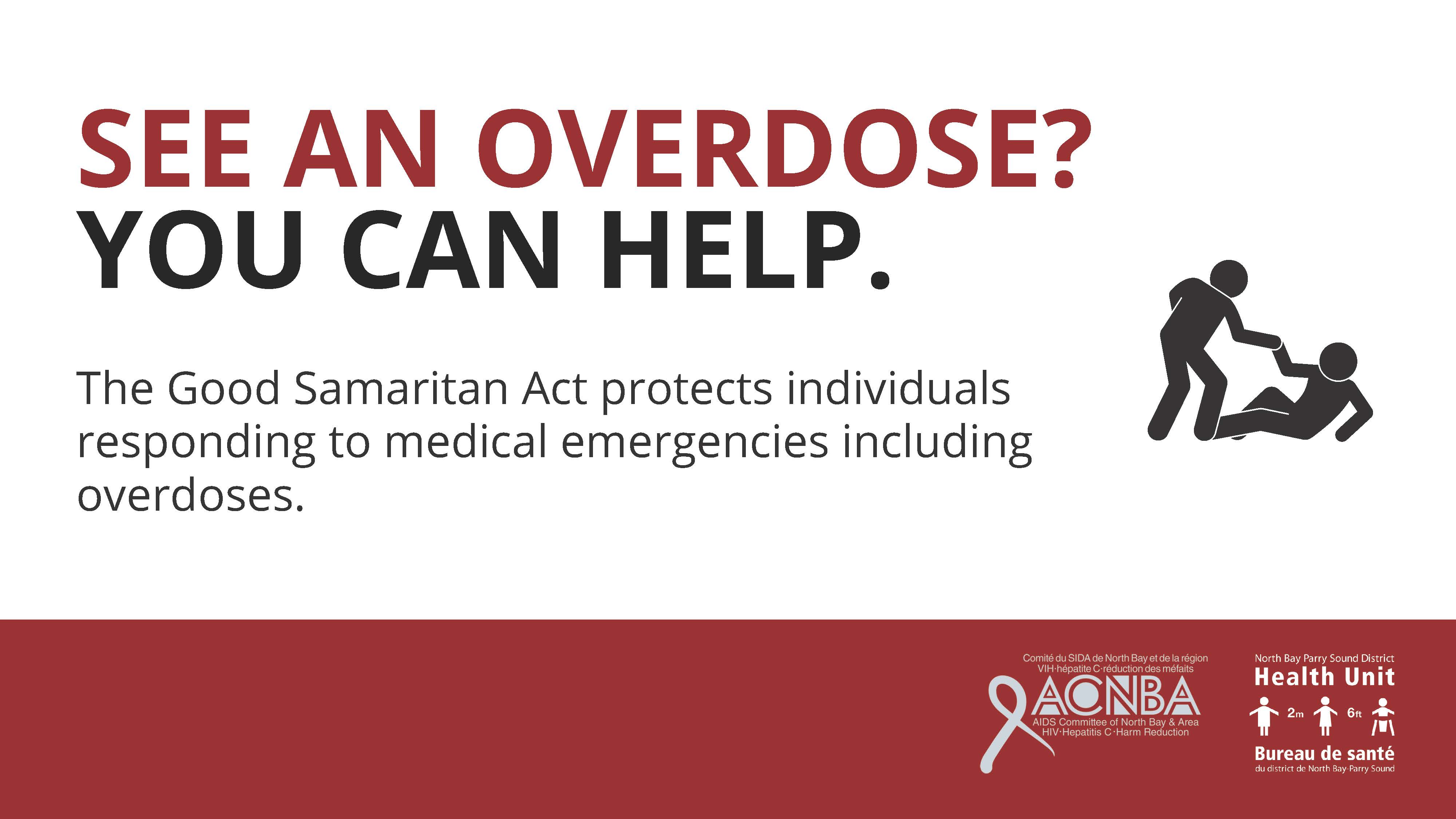
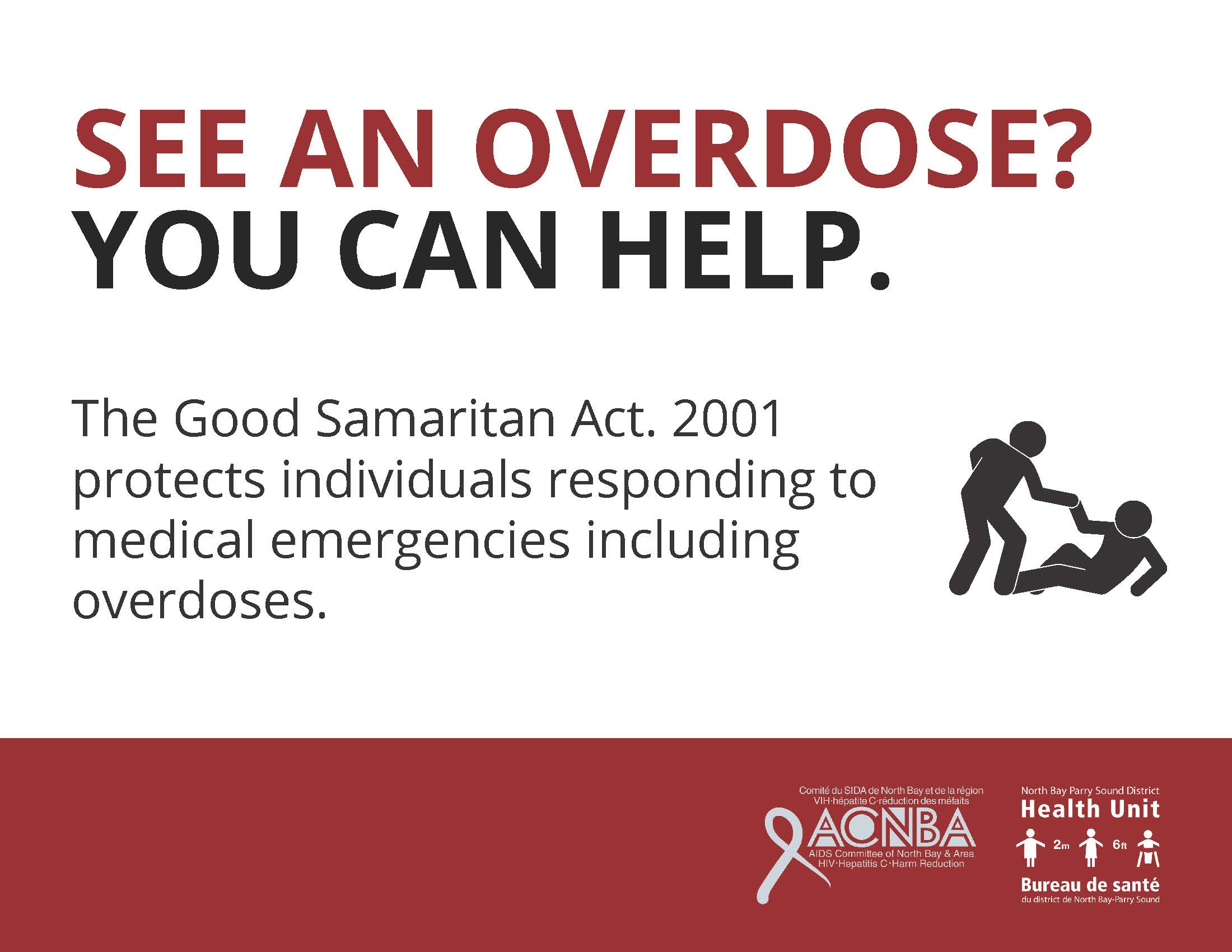
| The Good Samaritan Act, 2001 protects people who take action to help someone who is in a dangerous or life-threatening situation. If an individual is conscious and refuses your help, call 9-1-1 and stay close in case they lose consciousness. When someone is unconscious you have implied consent to take life-saving measures, such as using/administering naloxone. |
What is the Good Samaritan Drug Overdose Act, 2017? Who does it protect? |
|
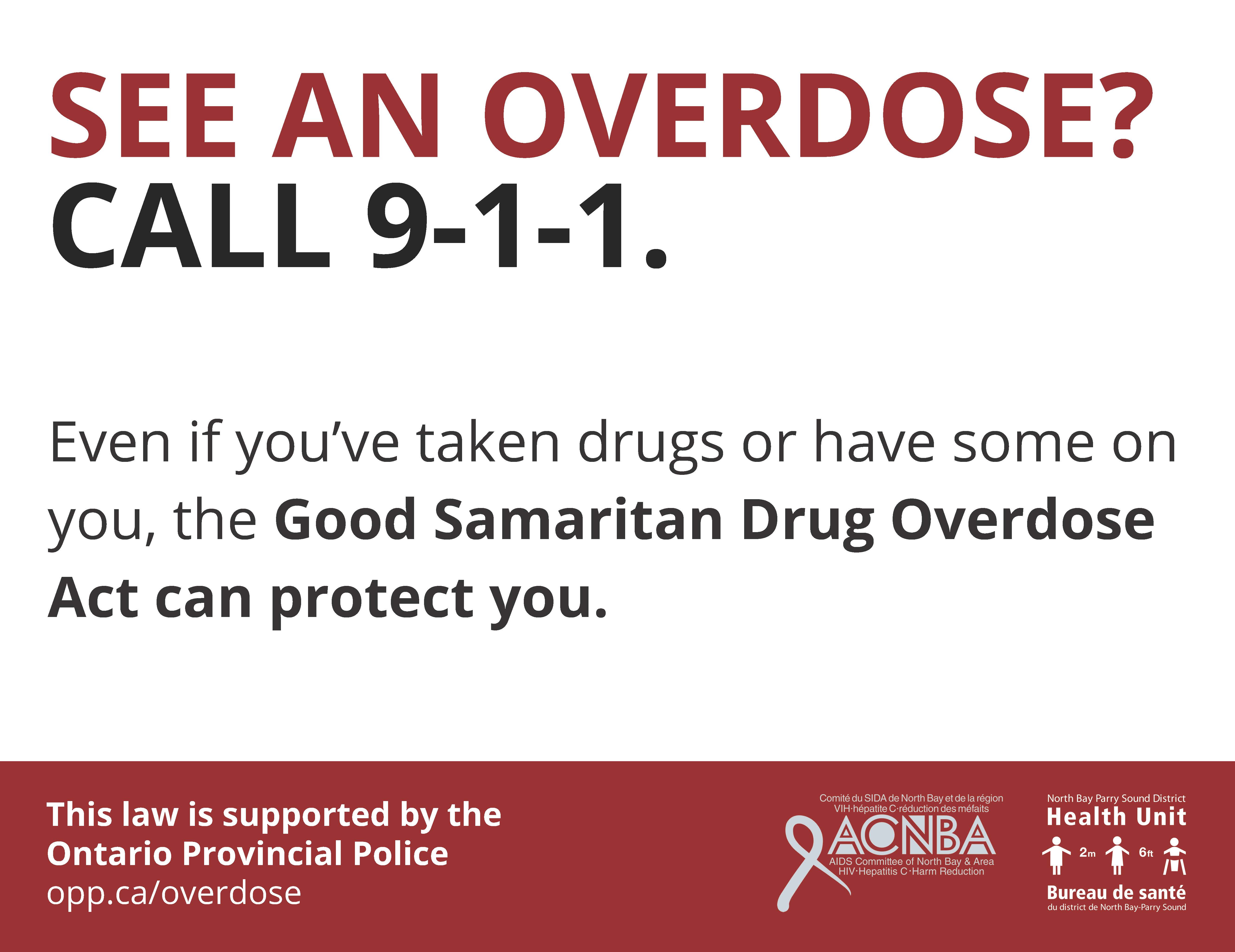
The Good Samaritan Drug Overdose Act, 2017 provides some legal protection to people involved with, or experiencing, an overdose if 9-1-1 is called. An example of this is protection from simple possession drug charges. |

Some language has become so common that we often don't realize its impact. Learn the ways you, your workplace and community can help reduce the stigma around drug use.
Naloxone Safety
Naloxone is safe to use. Giving naloxone to someone who is a child, is pregnant or lactating, has a medical condition, or has not taken opioids will not harm them.
The only reason to not give naloxone to someone who is experiencing an overdose is if the individual has a life-threatening allergy to naloxone or any of the ingredients.
If allergies are unknown (which is usually the case when responding to medical emergencies), give naloxone.
Naloxone does not directly make people violent or angry; however, naloxone does temporarily reverse the effects of the opioid, which can cause an individual to experience opioid withdrawal symptoms, leading to pain, distress and/or agitation. Giving the person and yourself some physical space while they are coming out of an overdose is recommended.
Reporting Naloxone Use
Naloxone use can be reported at any participating agency and/or pharmacy in Ontario. You may be asked to report on the following:
- Type of naloxone used/administered
- Doses of naloxone used/administered
- Number of times 9-1-1 was called
For information on where to report naloxone use refer to the section above on: Where can I get a naloxone kit and training?
Caring for Your Naloxone Kit
Naloxone should be stored at room temperature. Do not store naloxone in your vehicle, as it may overheat or freeze. Do not store in direct light.
Storage
Nasal Spray
Nasal spray naloxone should be stored at 15 -25 degrees celsius.
Nasal spray naloxone with a white plunger should be replaced if exposed to extreme heat or cold.
Nasal spray naloxone that comes in a newly issued red plunger can be thawed by allowing it to sit at room temperature for 15 minutes, and may still be used/administered if it has been thawed after being previously frozen.
If nasal spray naloxone is frozen and is needed to respond to an overdose, do not wait for the product to thaw. Seek emergency help right away.
Injectable Naloxone
Injectable naloxone should be stored between 15-30 degrees celsius.
Injectable naloxone should be replaced if it has been exposed to extreme heat or cold.
Expiry
Naloxone has a shelf-life of between 18 and 24 months. If only expired naloxone is available, it is safe to use it, but the expired medication might not be as effective.
Disposal
For expired nasal spray naloxone, scratch out the expiry date on the naloxone package with a permanent marker and bring the expired medication to a pharmacy that offers medication drop-off or disposal. Should this not be possible, please refer to the fact sheet regarding alternative methods of disposal.
We ask that expired injectable naloxone be brought to a pharmacy that offers medication drop-off for disposal. This will ensure that the glass ampoule and/or syringe are discarded safely.
Businesses, Agencies and Schools
My agency would like to find out if we are eligible to distribute naloxone or use/administer naloxone (as a first responder) under the Ontario Naloxone Program (ONP). Who do I contact to find out if my agency is eligible? |
The following organizations can join the ONP:
If your agency is interested in joining the ONP to distribute naloxone or use/administer naloxone (first responders only), please contact us at harm.reduction@healthunit.ca. |
My agency, business and/or school would like to train multiple staff to use/administer. Do you offer group trainings? |
|
We offer in-depth online naloxone training for general community members, businesses, agencies and/or schools. During each training we will explain where you can pick up naloxone. If you wish to register for training for your local business, agency and/or school please contact us at harm.reduction@healthunit.ca. |
Is there liability when using naloxone in the workplace? |
|
The liability associated with using/administering naloxone is low, as individuals are protected under the Good Samaritan Act, 2001. If using/administering naloxone is part of your job, it is best to check with your agency or business about policies and guidelines for using/administering naloxone. It is suggested that employers wishing to add additional first aid measures, such as naloxone use/administration, into the workplace seek legal counsel, and check with local jurisdictions responsible for health and safety so they are aware of any liability issues. |
Is it recommended that my agency, business and/or school have a workplace policy and guidelines for using/administering naloxone in the workplace? |
Yes, it is recommended that agencies develop a workplace policy and guidelines for using/administering naloxone. Workplace policies and guidelines for using/administering naloxone could include information on (but not limited to):
For copies of workplace or school sample naloxone policies, please contact us at harm.reduction@healthunit.ca |
Resources
Naloxone Saves Lives. Get Trained. Get a Kit. Campaign |
|
We partnered with the AIDS Committee of North Bay and Area to run a seven-week campaign after seeing an increase in opioid-related overdose deaths over the years and throughout the COVID-19 pandemic. The campaign was part of a larger strategy to help reduce the number of opioid-related overdose deaths in our region, and to increase awareness of:
We can all play a role in addressing overdoses in our communities. The campaign materials below encourage individuals, businesses and agencies to be prepared and carry naloxone in case an overdose occurs. Materials are available in English and French, and can be downloaded below or requested by emailing: harm.reduction@healthunit.ca Naloxone Saves Lives. Get Trained. Get a Kit. – Poster (8.5 x 11”)
Naloxone Saves Lives. Get Trained. Get a Kit. – Digital Screens
Naloxone Saves Lives. Get Trained. Get a Kit. – Public Service Announcements (English only)Signs and Symptoms of an Opioid Overdose – Poster (11 x 8.5”)
Signs and Symptoms of an Opioid Overdose – Digital Screens (11 x 8.5”)
Good Samaritan Drug Overdose Act, 2017 – Poster (11 x 8.5”)
Good Samaritan Drug Overdose Act, 2017 – Digital Screens
Good Samaritan Act, 2001 – Poster (11 x 8.5”)
Good Samaritan Act, 2001 – Digital Screens
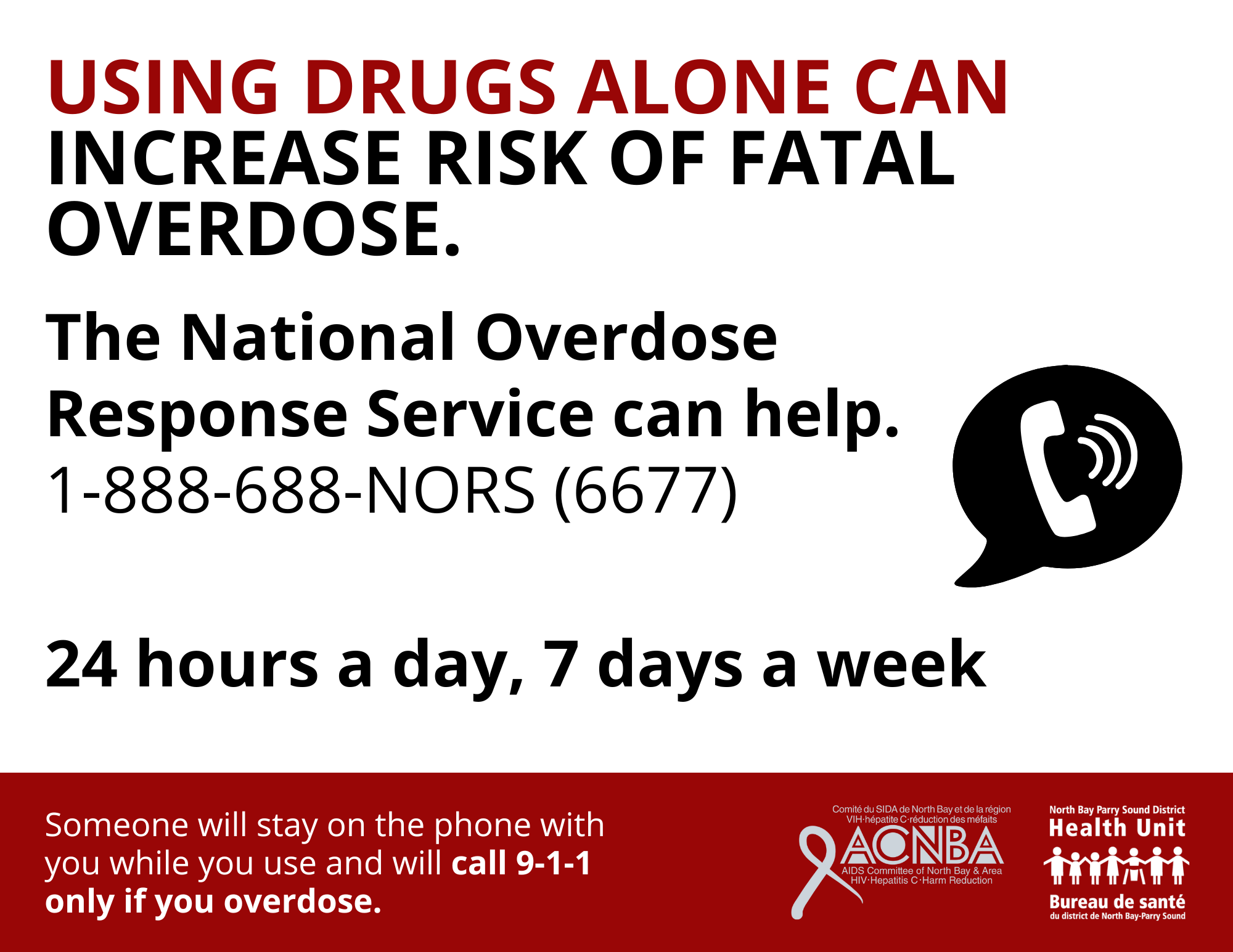
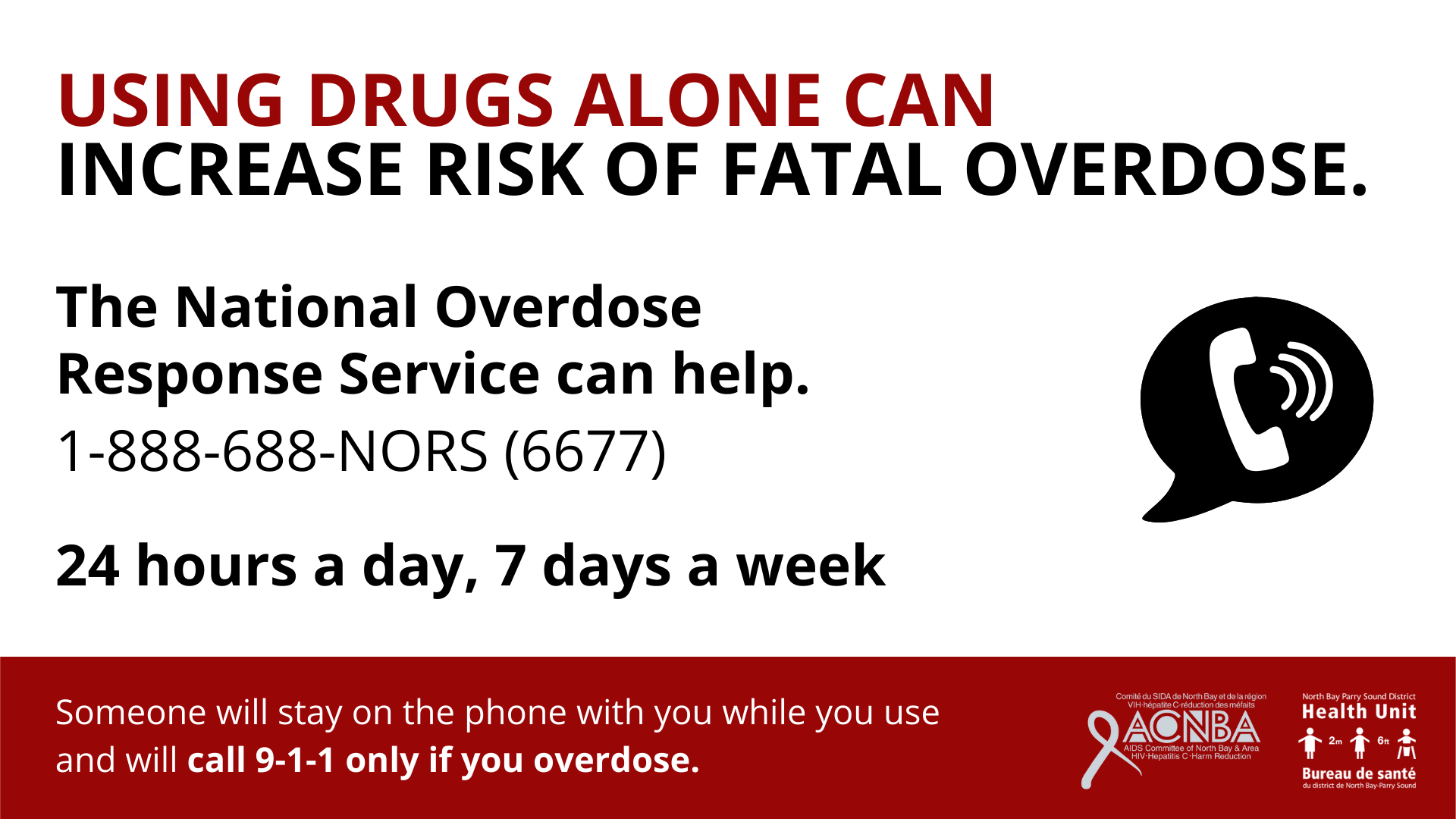
National Overdose Response Service – Poster (11 x 8.5”)
National Overdose Response Service – Digital Screens
ConnexOntario – Poster (11 x 8.5”)
ConnexOntario – Digital Screens (11 x 8.5”)
|
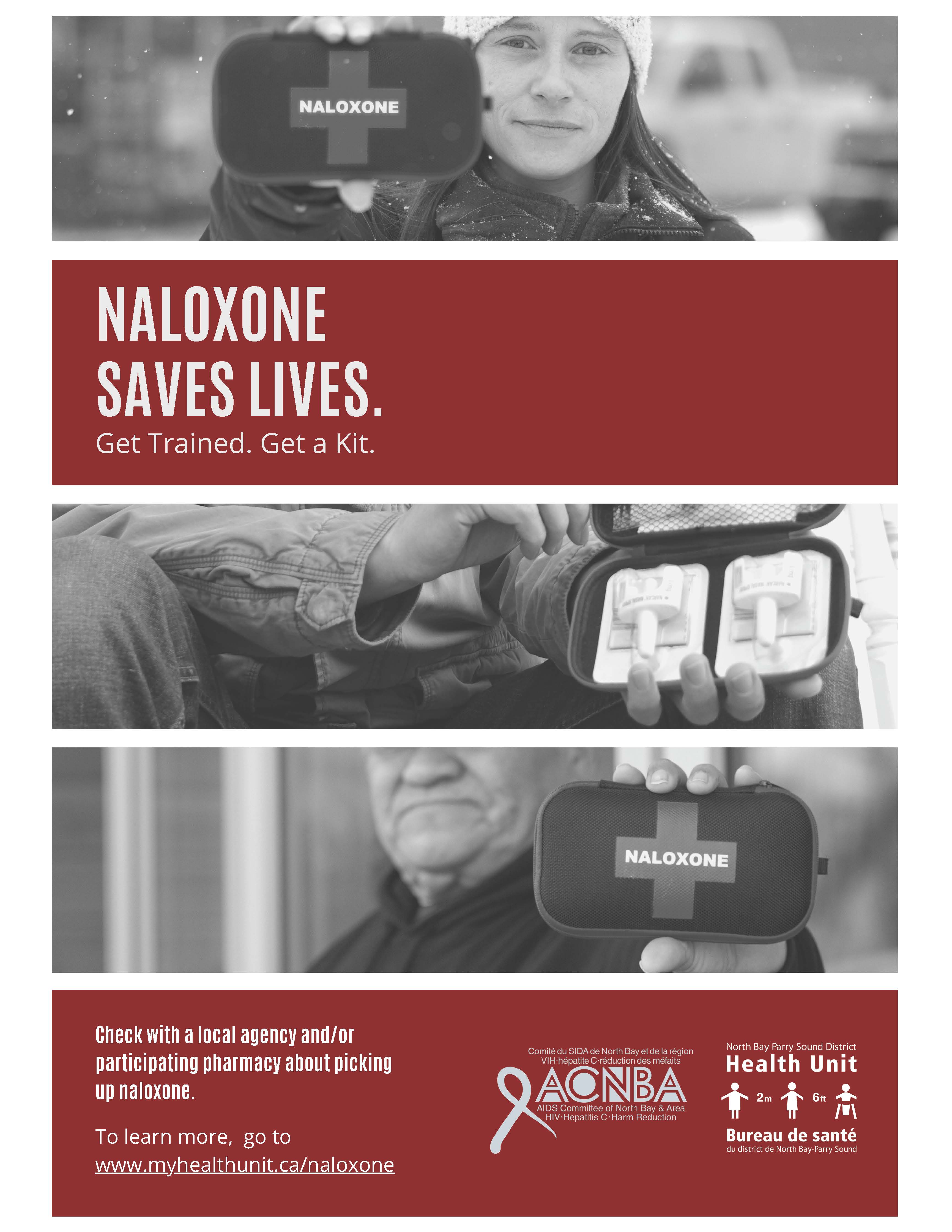
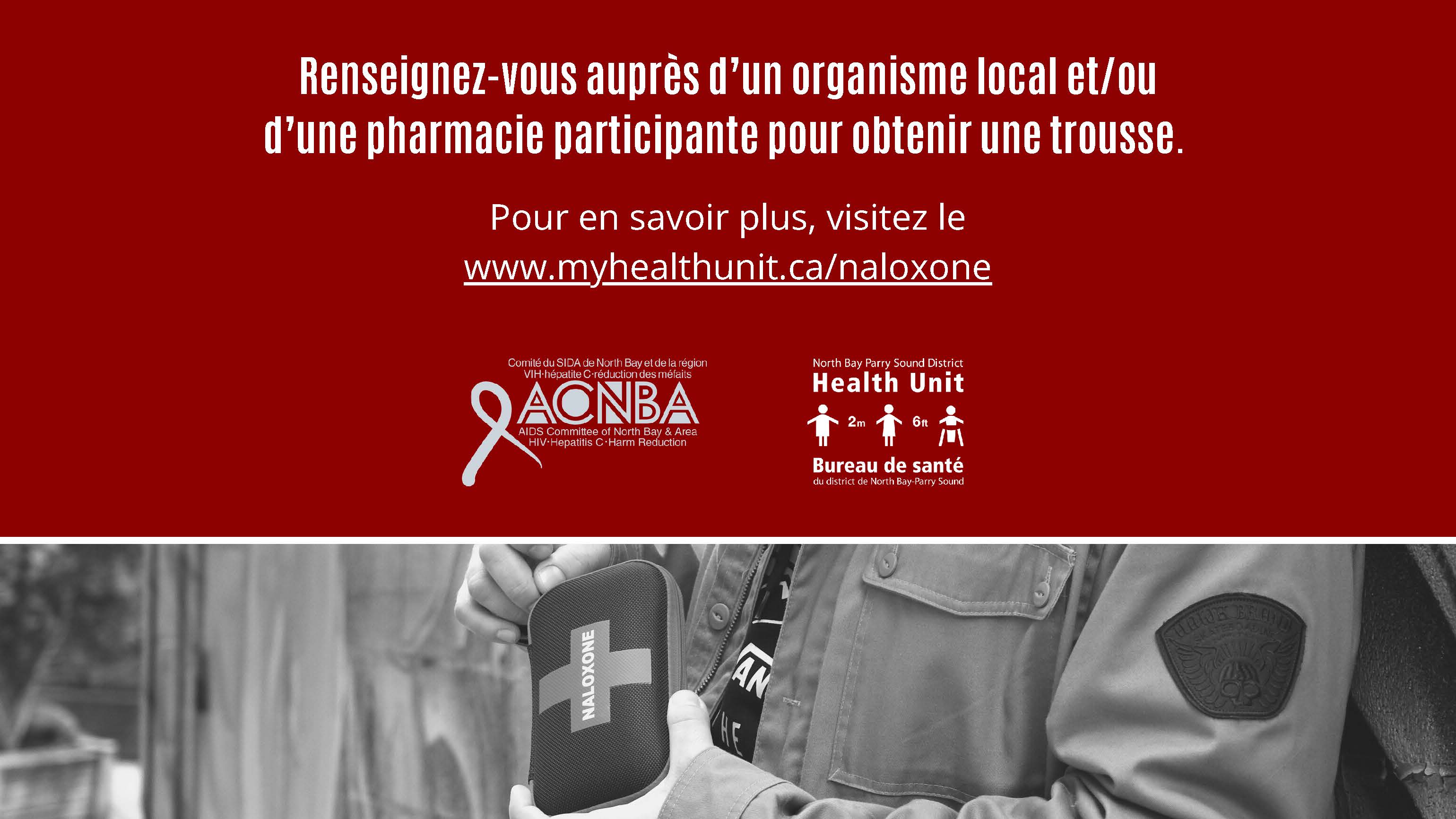
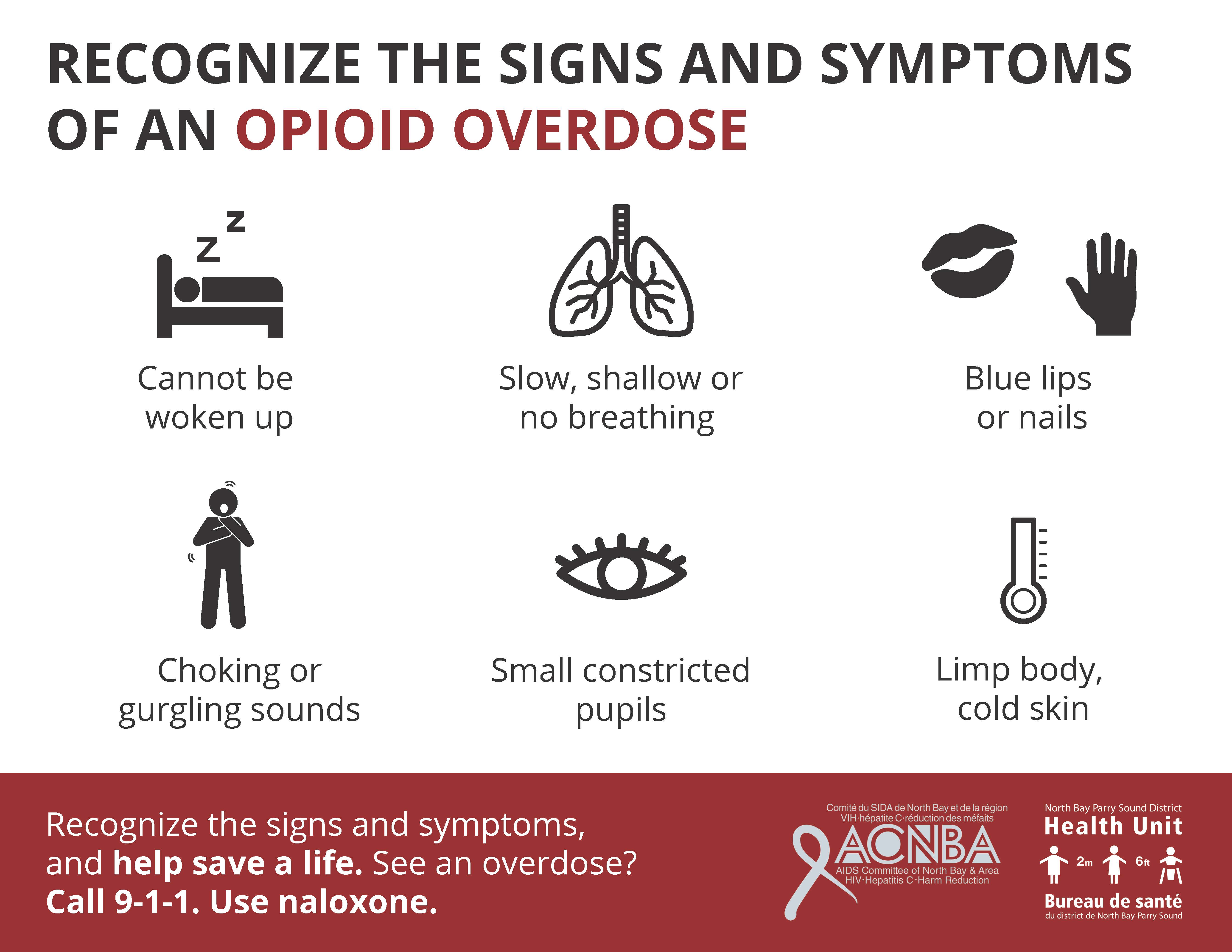
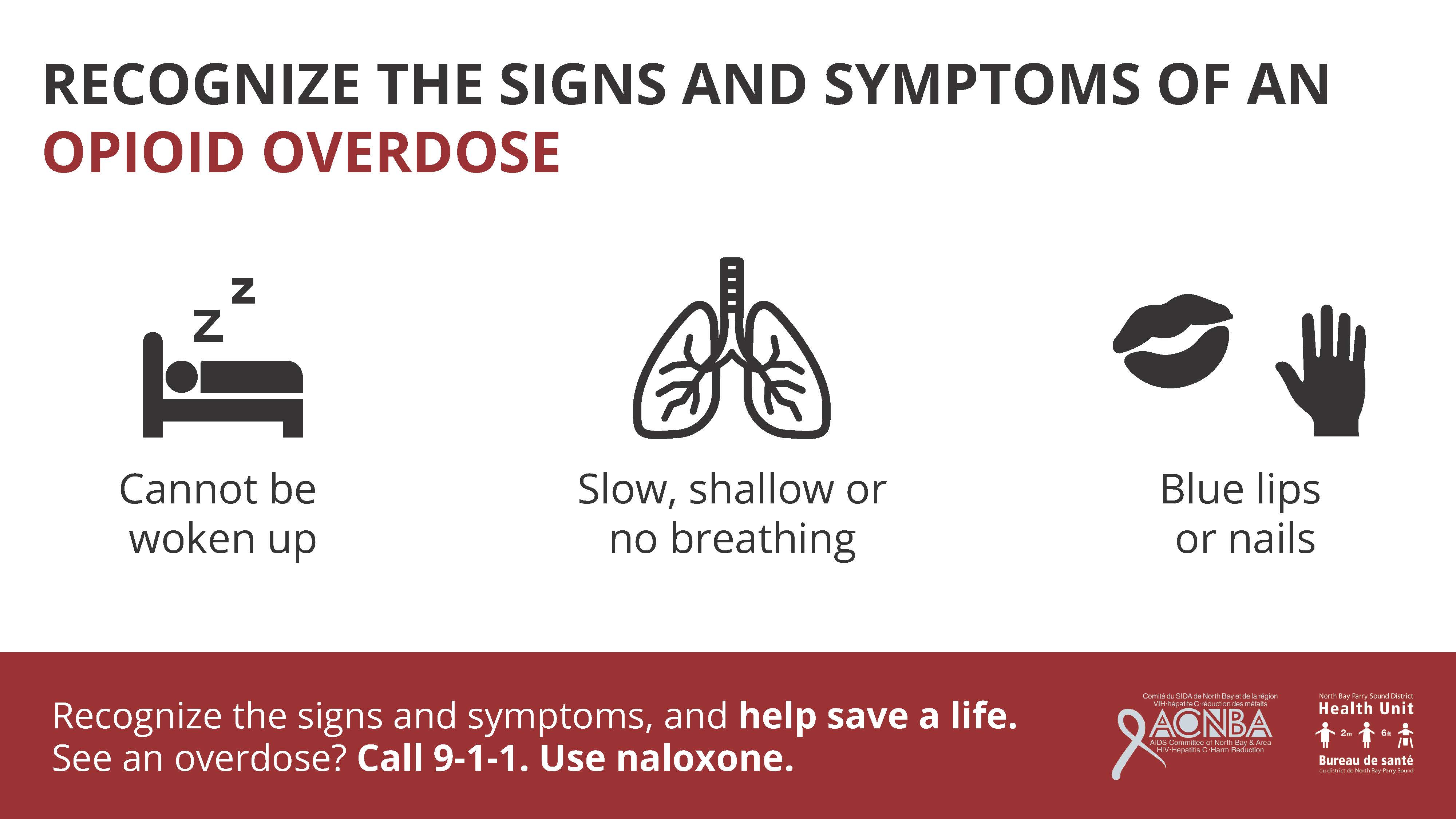
- Signs and Symptoms of an Opioid Overdose Poster [Health Unit] – English
- Signs and Symptoms of an Opioid Overdose Poster [Health Unit] – French
- 5 Steps to Responding to an Opioid Overdose Poster [Ministry of Health] – English
- 5 Steps to Responding to an Opioid Overdose Poster [Ministry of Health] – French