



What is household food insecurity?
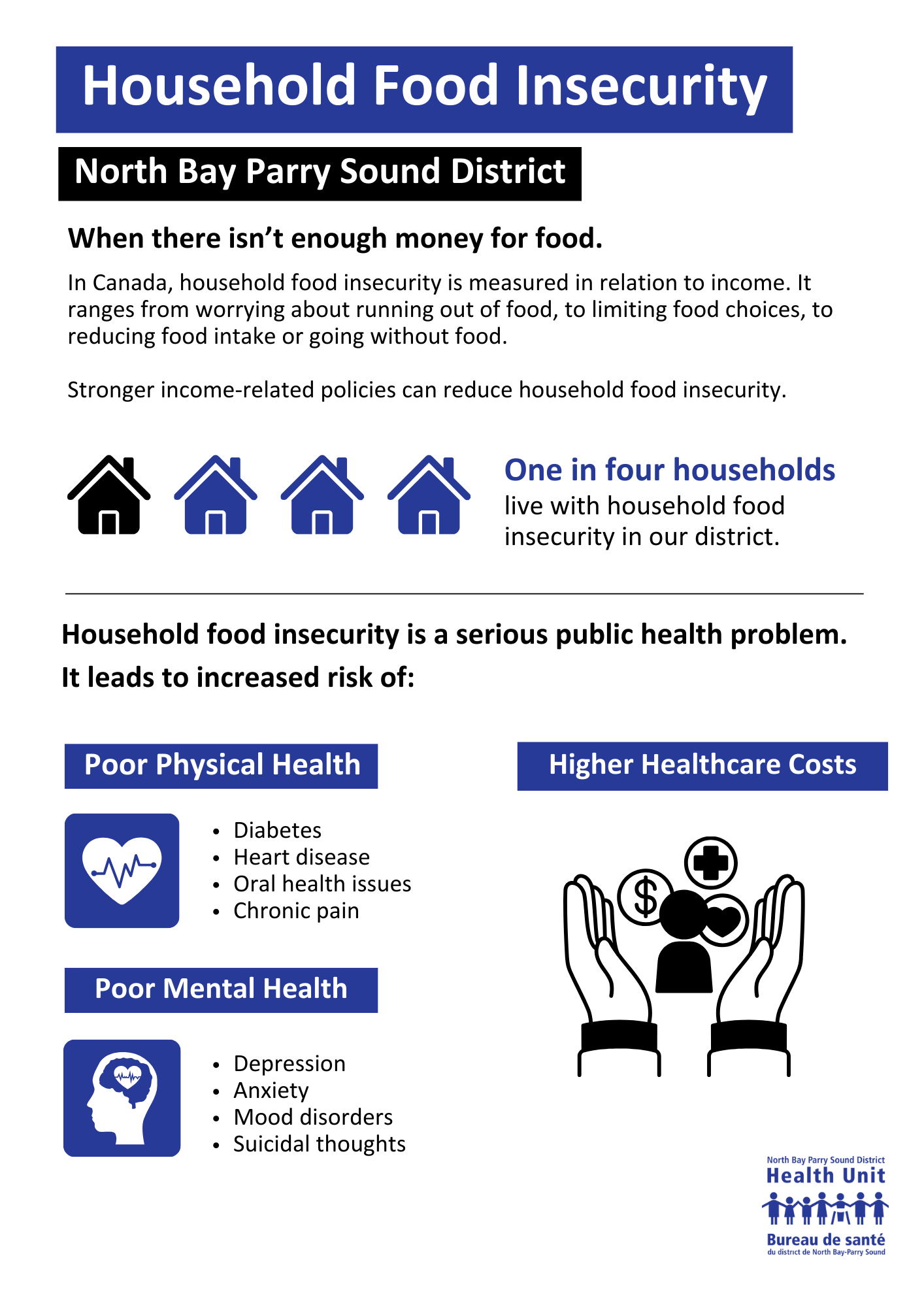
Household food insecurity means that a household doesn’t have enough money for food. It can range from worrying about running out of food, filling up on cheaper, less nutritious foods, or to skipping meals.
Monitoring food affordability
Check out the Food Insecurity and Food Affordability in Ontario report and infographic (April 2025) from Public Health Ontario and Ontario Dietitians in Public Health to learn more about monitoring food affordability in Ontario.
About 1 in 4 households in our district experience household food insecurity.
Living with household food insecurity can lead to higher risk of many chronic health issues in adults, such as:
- diabetes
- heart disease
- chronic pain
- poor oral health
- depression
- anxiety
It’s hard to manage chronic conditions without enough money for food.
Children are also at greater risk for health problems, particularly mental health problems that can last into adulthood.
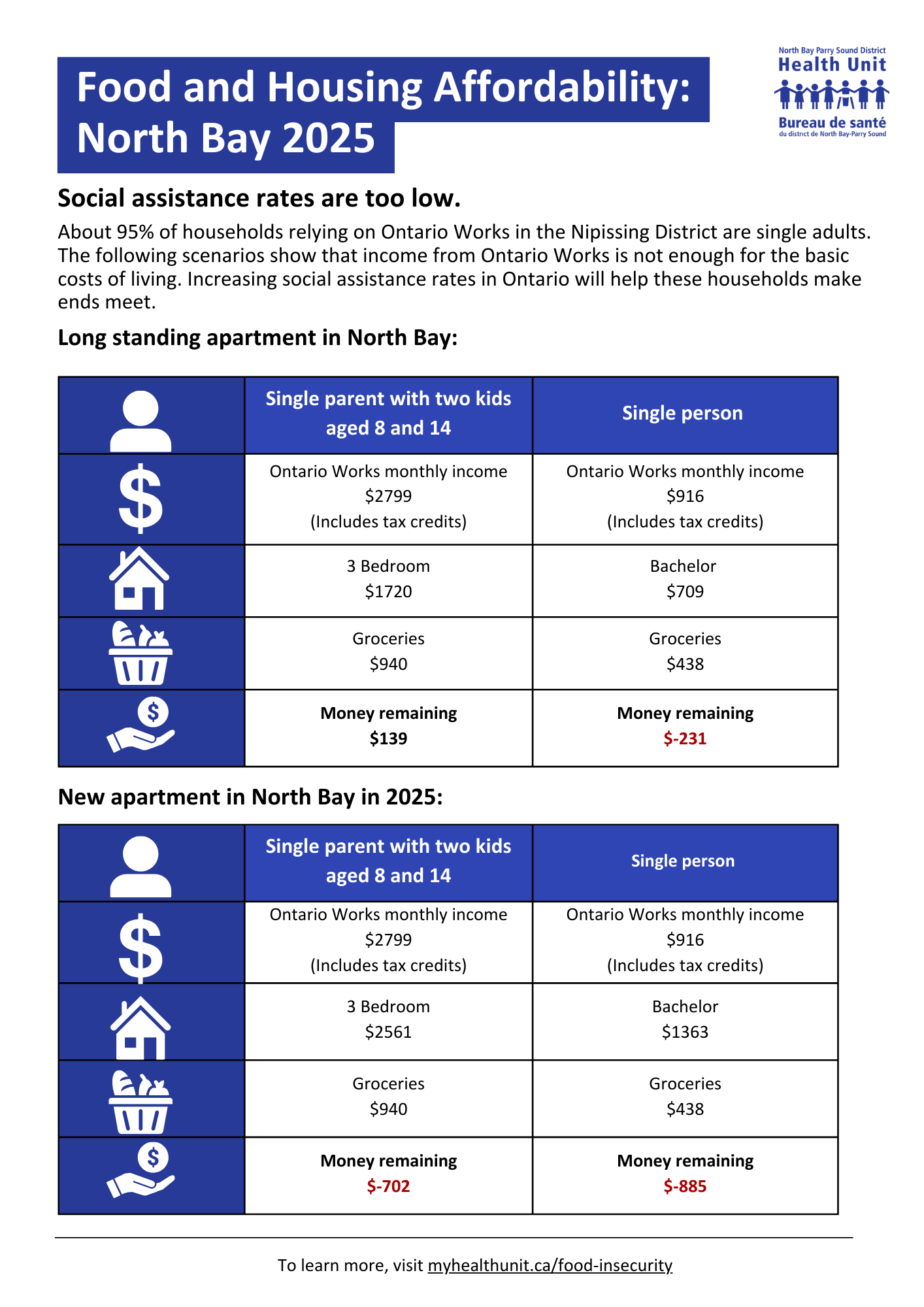
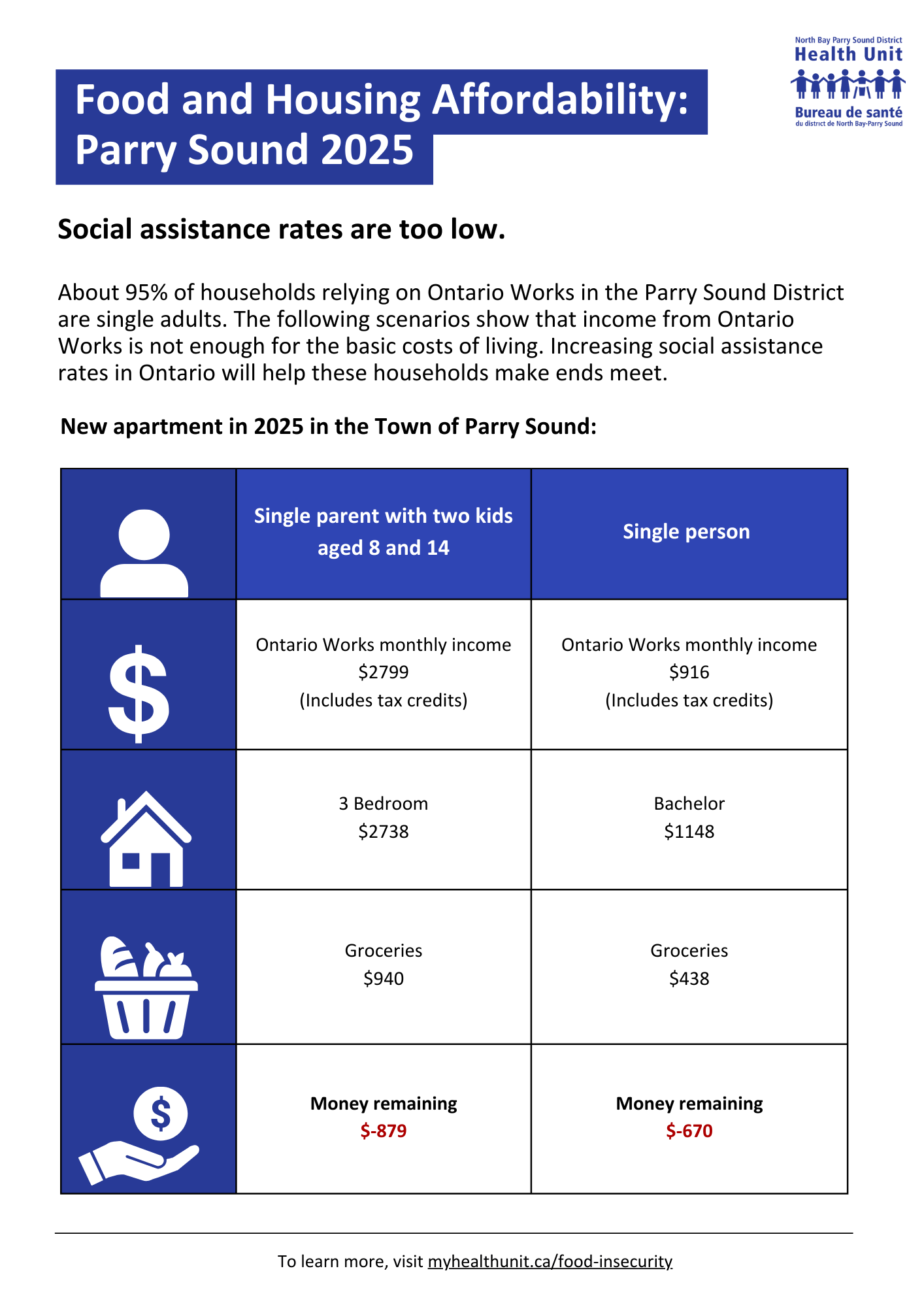
Household food insecurity is an income problem.
Households who struggle to pay for food, also struggle to pay for the other costs of living. The compromises these households make because they don't have enough money go far beyond food related decisions. To learn more about household food insecurity in Canada, visit PROOF - Identifying policy options to reduce household food insecurity.
Taking Action
At the Health Unit, we’re involved in ongoing public health advocacy. Below are some examples of our advocacy efforts about the need for income solutions to reduce household food insecurity in Ontario.