Hand hygiene resource manual for child care centres

Hand hygiene resource manual for child care centres

The World Health Organization (WHO, 2025) recommends regular handwashing with soap and water as the single most effective way to prevent the spread of germs that cause respiratory and gastrointestinal illnesses.

Handwashing, and the promotion of handwashing activities, is particularly important in childcare centres, as it has been shown to reduce diarrhea episodes by about 30% (Cochrane Database of Systematic Reviews, 2021, 6;12(1):CD004265).

Childcare centres play an important role in helping children learn healthy handwashing habits that can protect them, their families, and their communities.

Children begin learning about handwashing at an early age, but they need regular reminders and opportunities to practise these skills every day.

Educators help children develop lifelong healthy habits by modelling proper handwashing and making it part of the daily routine. Teaching children why, when and how to wash their hands helps reduce the spread of germs and creates a healthier learning environments and stronger, healthier communities.

The Healthy Hands: Hand Hygiene Resource Manual for Child Care Centres (initially developed in Winter 2020) has been updated to continue to support educators in teaching children about proper handwashing.

Easy-to-use lesson plans, activities, and educational materials are included to help children learn what germs are, how they spread, and how proper handwashing helps prevent illness. The activities are designed to fit naturally into daily routines, making handwashing a regular part of each child's day.

By encouraging good handwashing habits early in life, childcare centres can help reduce the spread of illness and support the health and well-being of children, staff, and families.

Hand washing is the best way to prevent the spread of infections.
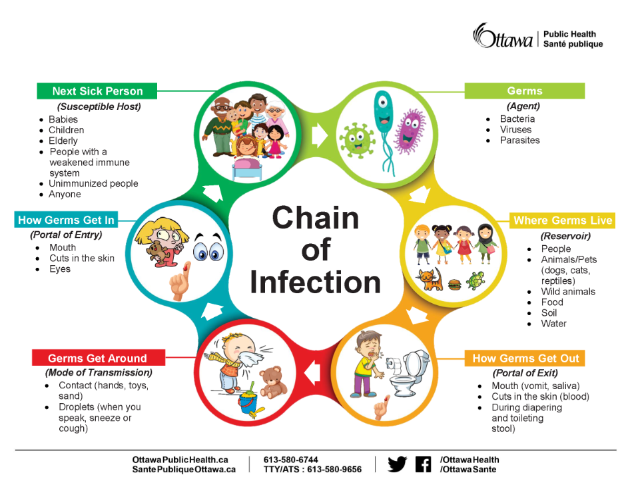
Picture of a chain of infection with people and germs in each link

Ottawa Public Health. (2025). Chain of infection.
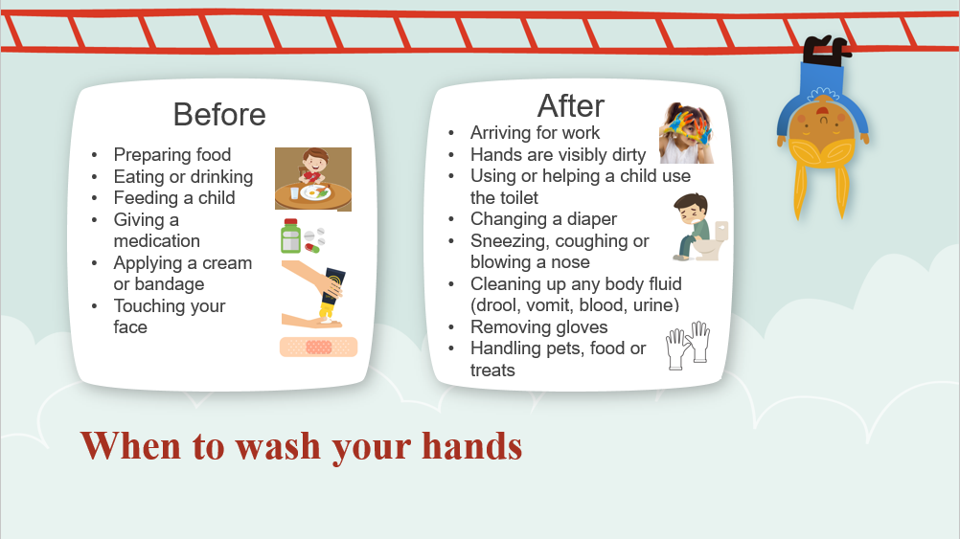
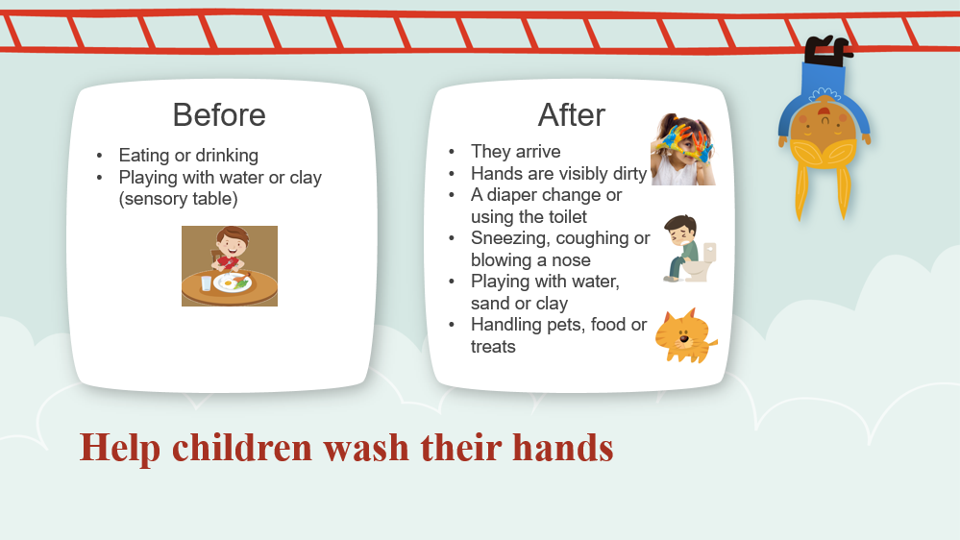
animated picture of a ladder with a child hanging with two boxes explaining before and after hand washing

Canadian Pediatric Society. (2015). Well Beings: A Guide to Health in Child Care. Ottawa, Ontario, p. 148-249.

Animated picture of a child hanging from a ladder with two boxes of before and after hand hygiene

Canadian Pediatric Society. (2015). Well Beings: A Guide to Health in Child Care. Ottawa, Ontario, p. 148-149.
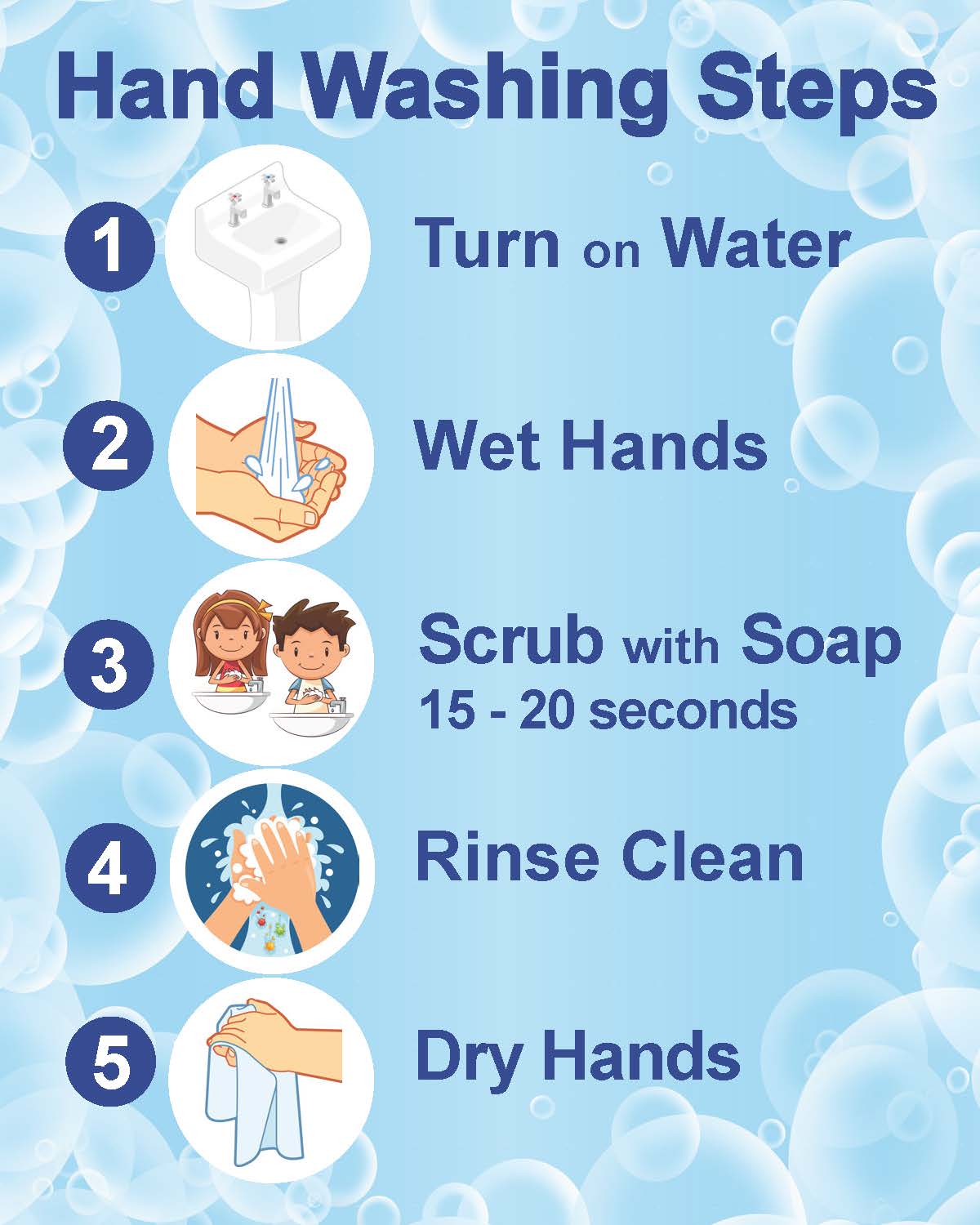
Hand washing poster with 5 steps

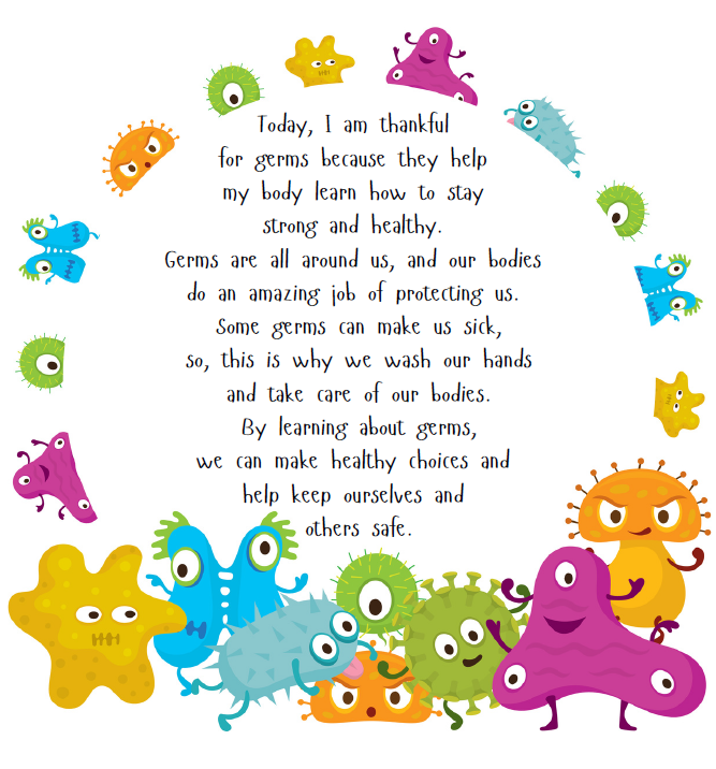
Round Gratitude statement with germs all around it

Lesson Plan #1: What are germs? 

1- 2 hours or multiple lessons

(Adapted with permission from GOJO Industries, Inc., creators of PURELL Instant Hand Sanitizer, www.gojo.com, 2013)

Learning Objective:

Children will learn that germs are tiny living things that can make us sick. As part of the learning objective, review the Gratitude Statement.

Materials:

Method:

  1. Ask the children if they have ever heard of germs before. Ask the following probing questions:
    1. Does anyone know what a germ is?
    2. Has anyone ever seen a germ?
    3. What does a germ do to people like me, you and others (e.g., parents, family members, friends, etc.)?
  2. Explain to the class that:
    1. Germs are tiny living things that cannot be seen using their eyes, and that they are everywhere.
    2. Germs can make us sick.
    3. Germs can be removed from hands with proper hand-washing techniques using soap and water or hand sanitizer. Review Hand Washing Steps.
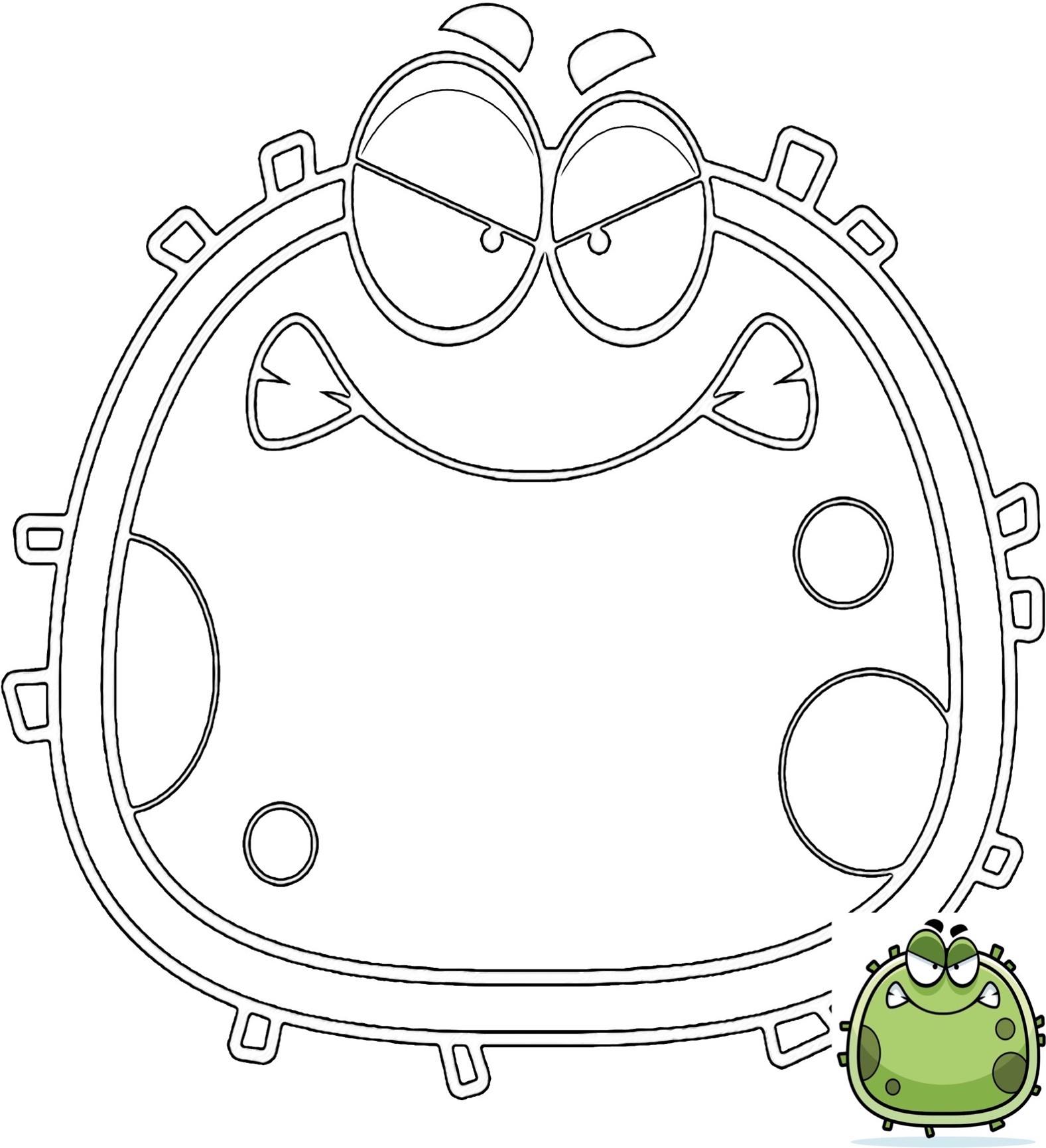
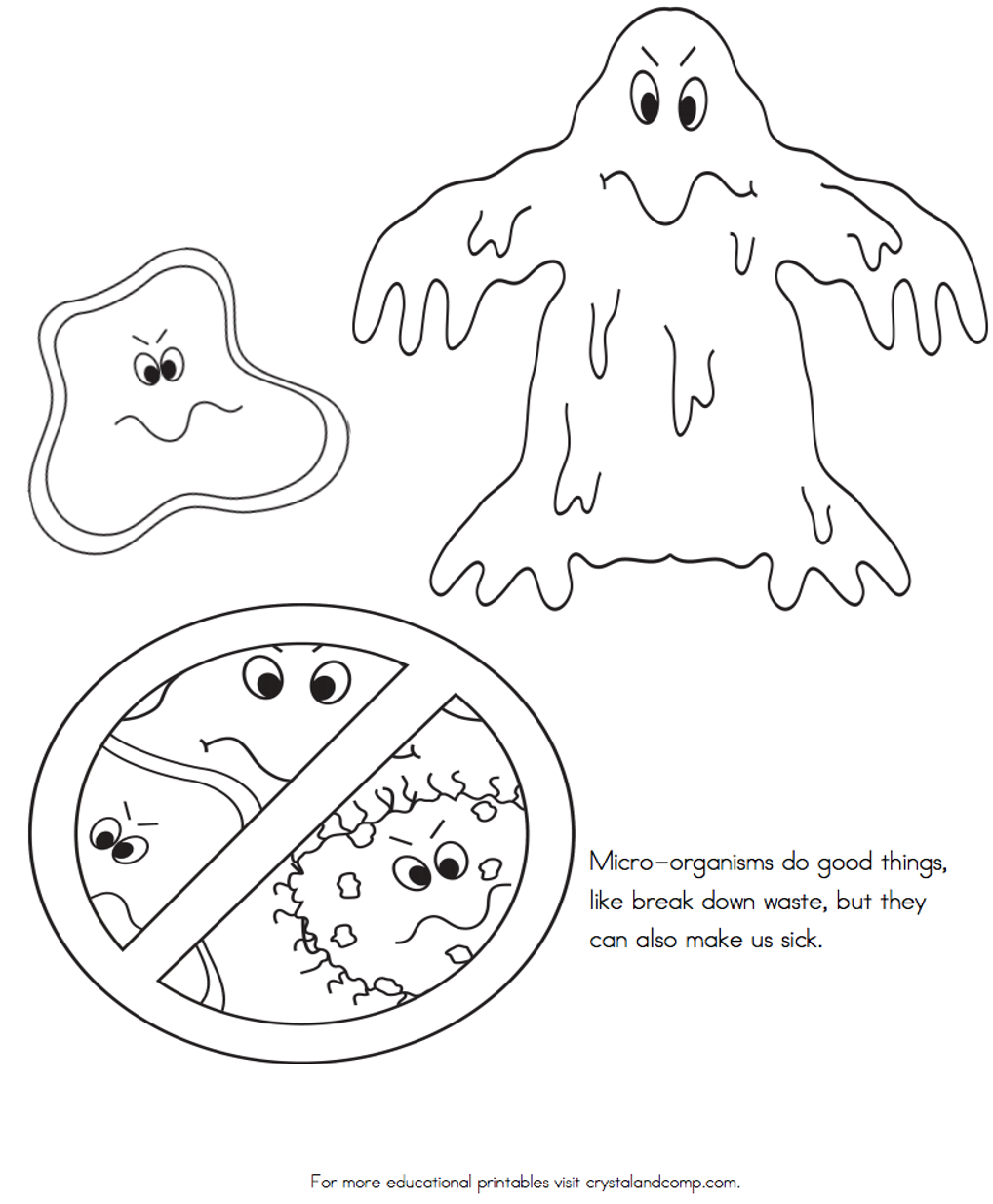
  3. Using the colouring sheets with the germs, explain to the children that there are many types of germs.
  4. Provide each child with a colouring sheet to colour.
  5. Ask the children to talk with a partner about germs and their different shapes for a few minutes and then they can discuss as a class.
  6. Give the children a blank piece of paper to draw a germ of their own and give it a name.

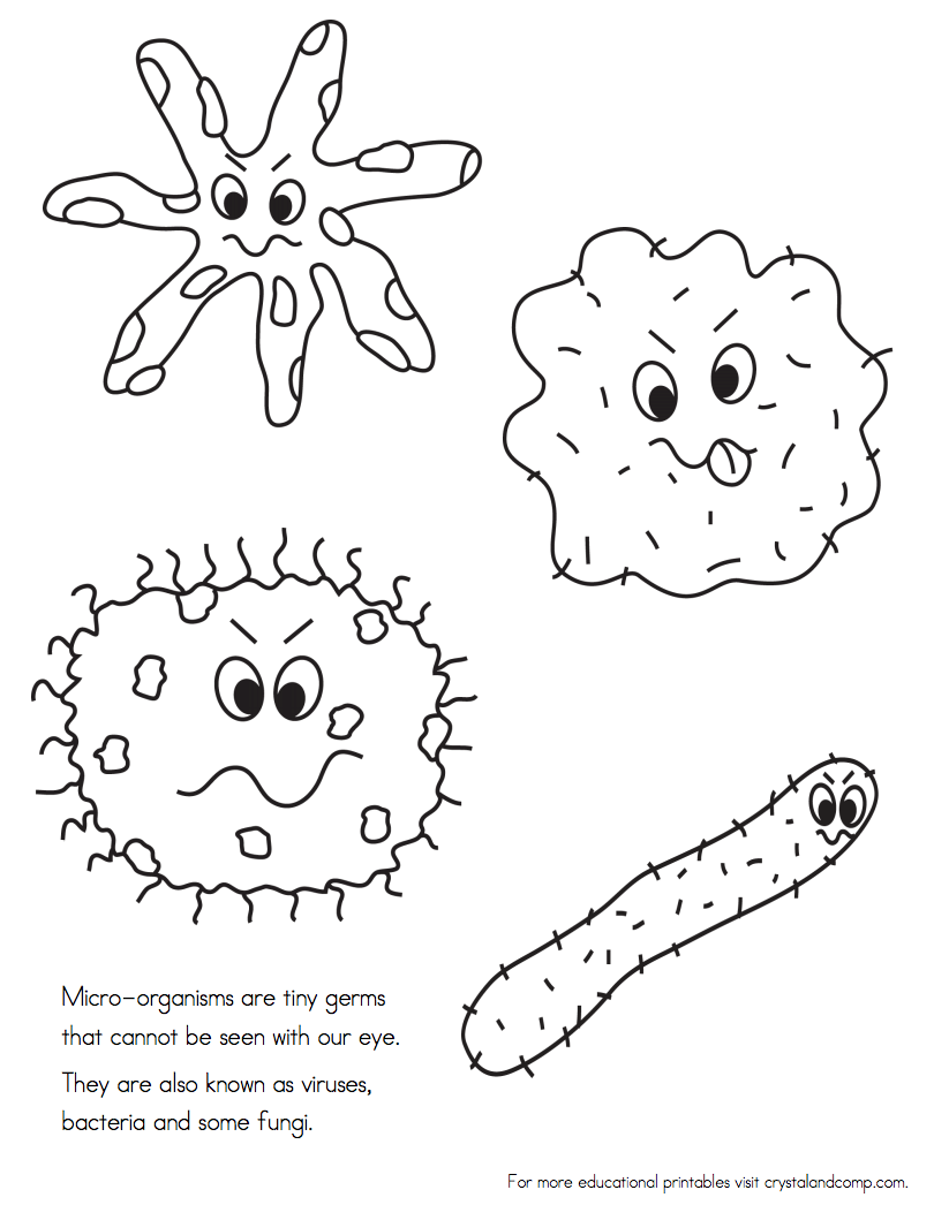
Pictures to color for Lesson Plan #1

Lesson Plan #2: Icky germs craft 

20-30 minutes

Learning Objective:

Children will learn that germs can make us sick and washing hands helps to keep us healthy. As part of the learning objective, review the Gratitude Statement.

Materials:

  • Construction paper
  • Pipe cleaners
  • Wiggle eyes
  • Glue
  • Scissors
  • Pictures of germs (Google images) for inspiration
  • Markers

Note: Fun shapes using different colours of paper for “germs” can be cut out in advance for younger children. 

Method:

  1. Ask the children if they have ever heard of germs before. Ask the following probing questions:
    1. Does anyone know what a germ is?
    2. Has anyone ever seen a germ?
    3. What does a germ do to people like me, you and others (e.g., parents, family members, friends, etc.)?
  2. Explain to the class that:
    1. Germs are tiny living things that cannot be seen using their eyes, and that they are everywhere.
    2. Germs can make us sick.
    3. Germs can be removed from hands with proper hand-washing techniques using soap and water or hand sanitizer. Review Hand Washing Steps.
  3. For the craft, help the children trace an outline of their hands on construction paper, cut out their traced hands and glue them onto a folded piece of construction paper to create a card.
  4. Have children cut out fun shapes using different colours of construction paper. Use colours that will stand out against the colour of paper used to trace the hands.
  5. Have children glue the fun shapes onto the traced hands, where they think the germs might be found. Allow the glue to dry.
  6. Have children decorate the “germs” using wiggly eyes. Markers and pipe cleaners can be used to create mouths, arms and legs, antennae, or other fun features.

Lesson Plan # 3: Germs on the run!

15-20 minutes

Learning Objective:

Children will learn that germs can spread on our hands and that soap helps to remove germs. As part of the learning objective, review the Gratitude Statement.

Materials:

  • Shallow bowl or plate
  • Water
  • Ground black pepper
  • Liquid dish soap

Method:

  1. Ask the children if they have ever heard of germs before. Ask the following probing questions:
    1. Does anyone know what germ is?
    2. Has anyone ever seen a germ?
    3. What does a germ do to people like me, you and others (e.g., parents, family members, friends, etc.)?
    4. Why do we wash our hands?
    5. When should we wash our hands?
  2. Explain to the class that:
    1. Germs are tiny living things that cannot be seen using their eyes, and that they are everywhere.
    2. Some germs can make us sick and how washing our hands properly with soap and water, or using hand sanitizer, helps remove them. Review Hand Washing Steps.
    3. When we do not wash our hands, we spread our germs, which can make others sick.
    4. The pepper in this experiment will represent germs.
  3. Fill a shallow bowl or plate with water, then sprinkle a generous amount of black pepper “germs” across the surface of the water.
  4. Ask the children to predict what will happen when a finger touches the water.
  5. Have a child gently touch the water with a clean finger. The pepper flakes will stick to their fingertip. Explain that just like pepper sticks to our fingers, germs can stick to our hands when we touch things around us.
  6. Ask the children to predict what will happen when a finger with soap touches the water.
  7. Help a child place a small drop of liquid soap on their fingertip and have the child’s soapy finger touch to the center of the water and watch the magic. The black pepper “germs” will instantly run away from the soapy finger to the edges of the bowl.
  8. Review that the soap helps move germs away and keeps our hands clean. Washing our hands before eating, after using the bathroom, after playing outside, and after coughing or sneezing helps keep our hands clean and our bodies healthy.

Lesson Plan #4: Clean hands, healthy me! (Germ sensory bag)

25-30 Minutes

Learning Objective:

Children will learn that washing hands helps to keep us healthy. As part of the learning objective, review the Gratitude Statement.

Materials:

  • Large zip-top bag
  • Markers
  • Glue stick
  • Construction paper
  • Nail polish remover
  • Cotton ball
  • Small pompoms
  • Clear gel (e.g., hair gel, body wash, hand soap, or shampoo)
  • Transparent tape
  • Small soft nail brush
  • Handwashing songs on YouTube

Note: Germ sensory bags can be prepared in advance for younger children.

Method:

  1. Ask the children if they have ever heard of germs before. Ask the following probing questions:
    1. Does anyone know what germ is?
    2. Has anyone ever seen a germ?
    3. What does a germ to to people like me, you and others (e.g.. parents, family members, friends, etc.)?
  2. Explain to the class that:
    1. Germs are tiny living things that cannot be seen using their eyes, and that they are everywhere.
    2. Germs can make us sick.
    3. Germs can be removed from hands with proper hand-washing techniques using soap and water or hand sanitizer. Review Hand Washing Steps.
  3. To prepare the sensory bags, remove the label from the zip top bag using nail polish remover and a cotton ball.
  4. Help each child trace one or both of their hands onto construction paper and carefully cut them out.
  5. Help each child trim another sheet of construction paper so that it is the same size as the zip-top bag. This will be the background for sensory bags, so let each child choose a color they like. Hint: blue looks like water.
  6. Help each child use a glue stick to attach their hand cutout(s) to the trimmed background paper. Let each child decorate their hand cutout(s) by drawing bubbles, jewelry, fingernails, or any other details with markers.
  7. Help each child place the decorated construction paper behind the zip-top bag. Fold the edges of the bag around the paper and secure them with tape, leaving the zipper top open.
  8. Have each child add a handful of small pom-poms to the bag. Then carefully squeeze enough clear gel into the bag to cover the background. Approximately ½ cup of gel.
  9. Help seal the bag tightly, then fold the sealed edge over the back of the paper and secure it with additional tape. The sensory bag is ready to use!
  10. Demonstrate how to push the germs (pom poms) off their hands using fingers or a small soft nail brush. Encourage each child to move all the “germs” off their hands.
  11. Play a hand washing song on YouTube in the background as children prepare or play with their sensory bags.

Lesson Plan #5: Pin the soap on the germ

15-30 minutes

Learning Objective:

The children will learn that washing their hands with soap and water gets rid of germs. As part of the learning objective, review the Gratitude Statement.

Materials:

  • Poster of hand with germs (available for loan from the Health Unit)
  • Pictures of liquid soap

Method:

  1. Ask the children if they have ever heard of germs before. Ask the following probing questions:
    1. Does anyone know what a germ is?
    2. Has anyone ever seen a germ?
    3. What does a germ do to people like me, you and others (e.g., parents, family members, friends, etc.)?
  2. Explain to the class that:
    1. Germs are tiny living things that cannot be seen using their eyes, and that they are everywhere.
    2. Germs can make us sick.
    3. Germs can be removed from hands with proper hand-washing techniques using soap and water or hand sanitizer. Review Hand Washing Steps.
  3. Have children take turns placing pictures of soap on the hand to get rid of all the germs.

Lesson Plan #6: How clean are your hands? (Glo-Germ)

(Adapted with permission from Ottawa Public Health, 2013)

Learning Objective:

The children will recognize that germs can be on their hands even though they cannot be seen and that hand washing can remove germs from hands. As part of the learning objective, review the Gratitude Statement.

Materials:

  • Glo-Germ Kit (available for loan from the Health Unit)
  • Hand washing sink
  • Liquid soap
  • Paper towel

Method:

  1. Ask the children if they have ever heard of germs before. Ask the following probing questions:
    1. Does anyone know what a germ is?
    2. Has anyone ever seen a germ?
    3. What does a germ do to people like me, you and others (e.g., parents, family members, friends, etc.)?
  2. Explain to the class that:
    1. Germs are tiny living things that cannot be seen using their eyes, and that they are everywhere.
    2. Germs can make us sick.
    3. Germs can be removed from hands with proper hand-washing techniques using soap and water or hand sanitizer. Review Hand Washing Steps.
  3. Place a small amount of Glo-Germ on each child’s hand and have the children rub the lotion all over their hands. Explain that, like the lotion, germs are on their hands although they cannot see them.
  4. Have children place their hands under the UV light (you may have to dim the lights in the room). The areas that have Glo-Germ will glow under the light.
  5. Have the children wash their hands and return to look at their hands under the UV light again. There should be a significant reduction in the areas that glow.
  6. Discuss areas on their hands that are sometimes missed during hand washing (i.e. areas that continued to glow under the light). These are usually the thumbs, between the fingers, and around the fingernails. Encourage children to pay extra attention to these areas whenever hand washing. Explain that, like germs, the lotion can be washed off through proper hand washing.

Lesson Plan #7: Sick Simon reading with spray bottle

15-20 minutes

Learning Objective: 

The children will learn more about where germs come from and how they are spread. As part of the learning objective, review the Gratitude Statement.

Materials:

  • Sick Simon hard cover book or YouTube read along
  • Spray bottle filled with fresh clean water. Setting should be on a very fine mist.
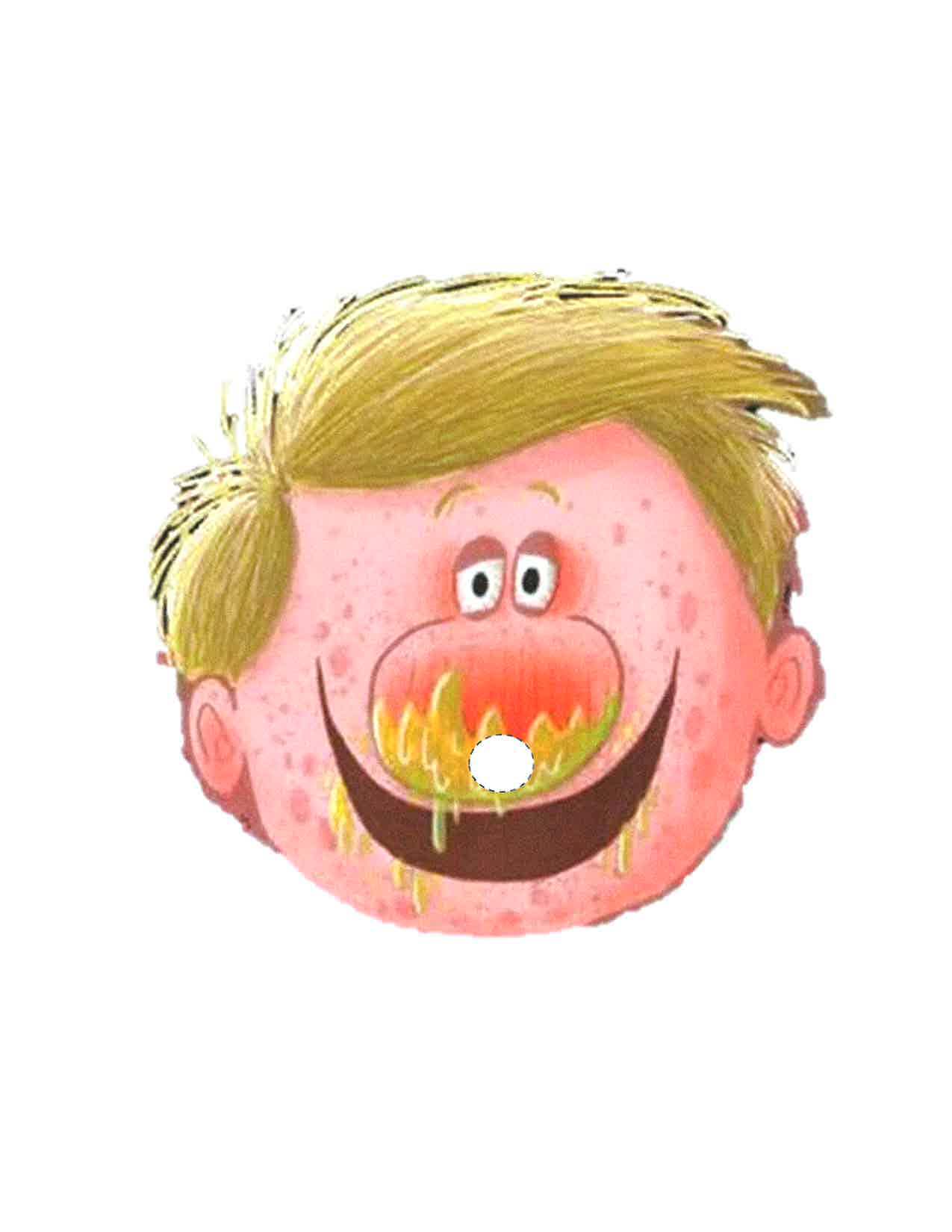
  • Cut out of a Sick Simon’s face. Cut out a nose and use the spray bottle as a nose (put nozzle of spray bottle through the hole). 

Method:

  1. Ask the children if they have ever heard of germs before. Ask the following probing questions:
    1. Does anyone know what a germ is?
    2. Has anyone ever seen a germ?
    3. What does a germ do to people like me, you and others (e.g., parents, family members, friends, etc.)?
  2. Explain to the class that:
    1. Germs are tiny living things that cannot be seen using their eyes, and that they are everywhere.
    2. Germs can make us sick.
    3. Germs can be removed from hands with proper hand-washing techniques using soap and water or hand sanitizer. Review Hand Washing Steps.
  3. Have the children sit in a circle or in their usual spots for story time. 
  4. Tell the children that the story is about a little boy named Simon who has a bad cold. Show the children the “Simon” spray bottle. 
  5. Read the story (or play the YouTube read along). Each time Simon sneezes, coughs, or spreads germs, lightly spray a mist of water toward the children to show how germs can travel. Let the children know beforehand that they may feel a little mist if they are sitting close by. 

Additional Resources:

Some additional activities are available for school-age children. Help Sick Simon navigate the maze and get rid of bad germs.

Lesson Plan #8: When to wash (picture matching)

15-30 minutes

Learning Objective:

The children will learn the proper moments for hand washing. As part of the learning objective, review the Gratitude Statement.

Materials:

Method:

  1. Ask the children if they have ever heard of germs before. Ask the following probing questions:
    1. Does anyone know what a germ is?
    2. Has anyone ever seen a germ?
    3. What does a germ do to people like me, you and others (e.g., parents, family members, friends, etc.)?
  2. Explain to the class that:
    1. Germs are tiny living things that cannot be seen using their eyes, and that they are everywhere.
    2. Germs can make us sick.
    3. Germs can be removed from hands with proper hand-washing techniques using soap and water or hand sanitizer. Review Hand Washing Steps.
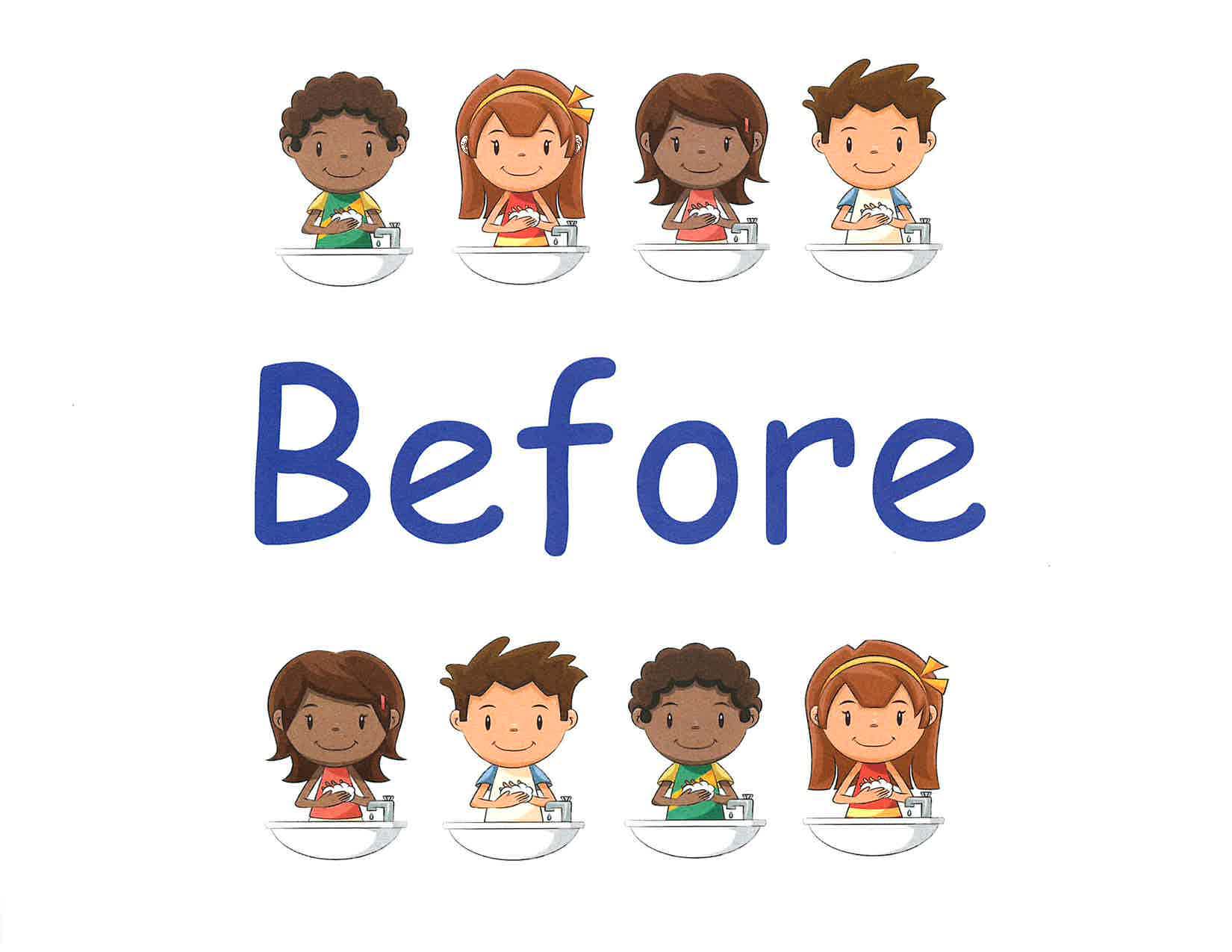
  3. Post the “BEFORE” and “AFTER” signs on a wall or board.
  4. Show the children photos of activities one at a time.
  5. After showing a photo of an activity, ask the children if they would wash their hands “BEFORE” or “AFTER” this activity. Tape the photo under or near the appropriate sign.

Note: Some of the activities may require handwashing “BEFORE” and “AFTER”. See the answer key page.

Activity Before After
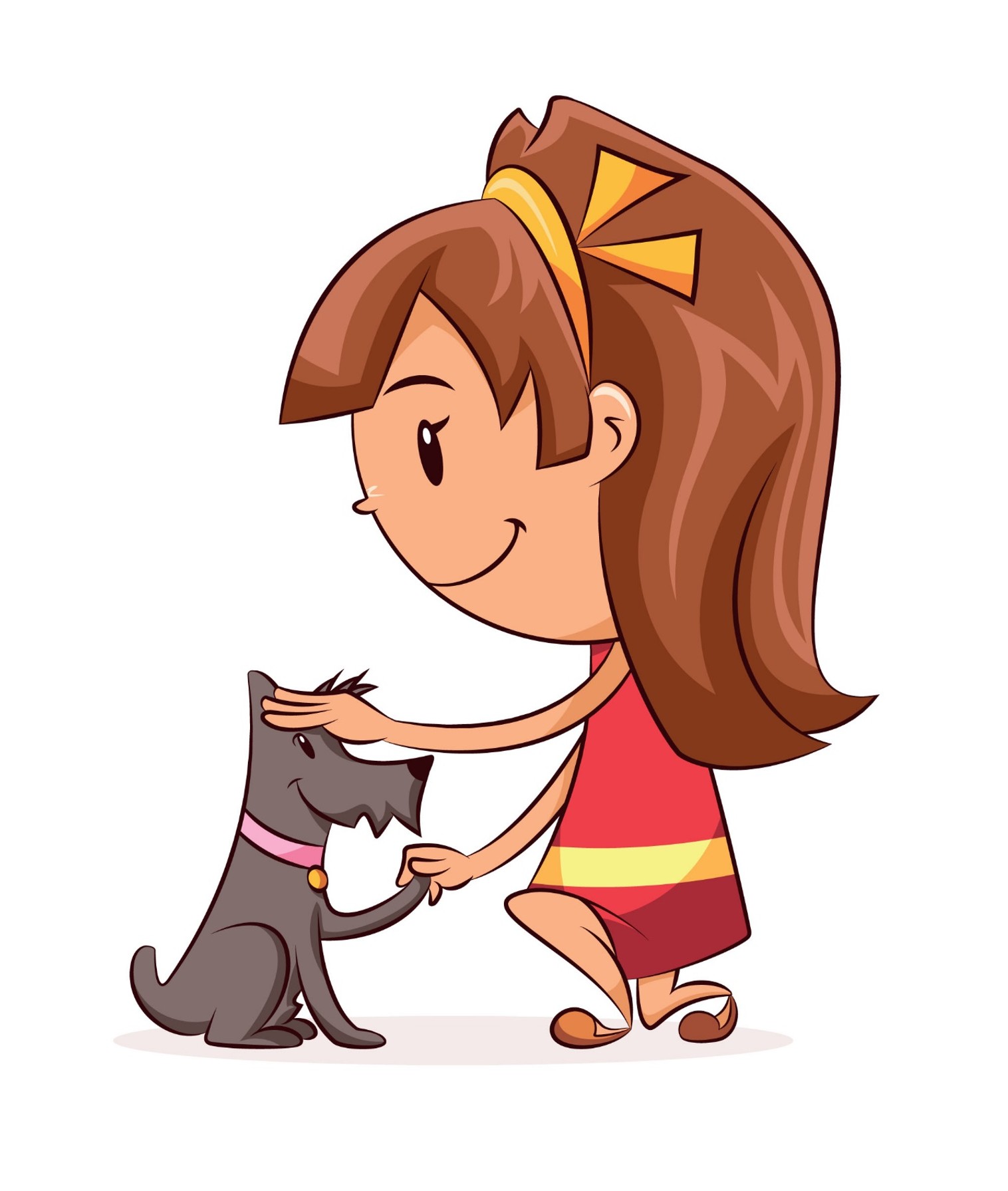
Girl petting dog   X
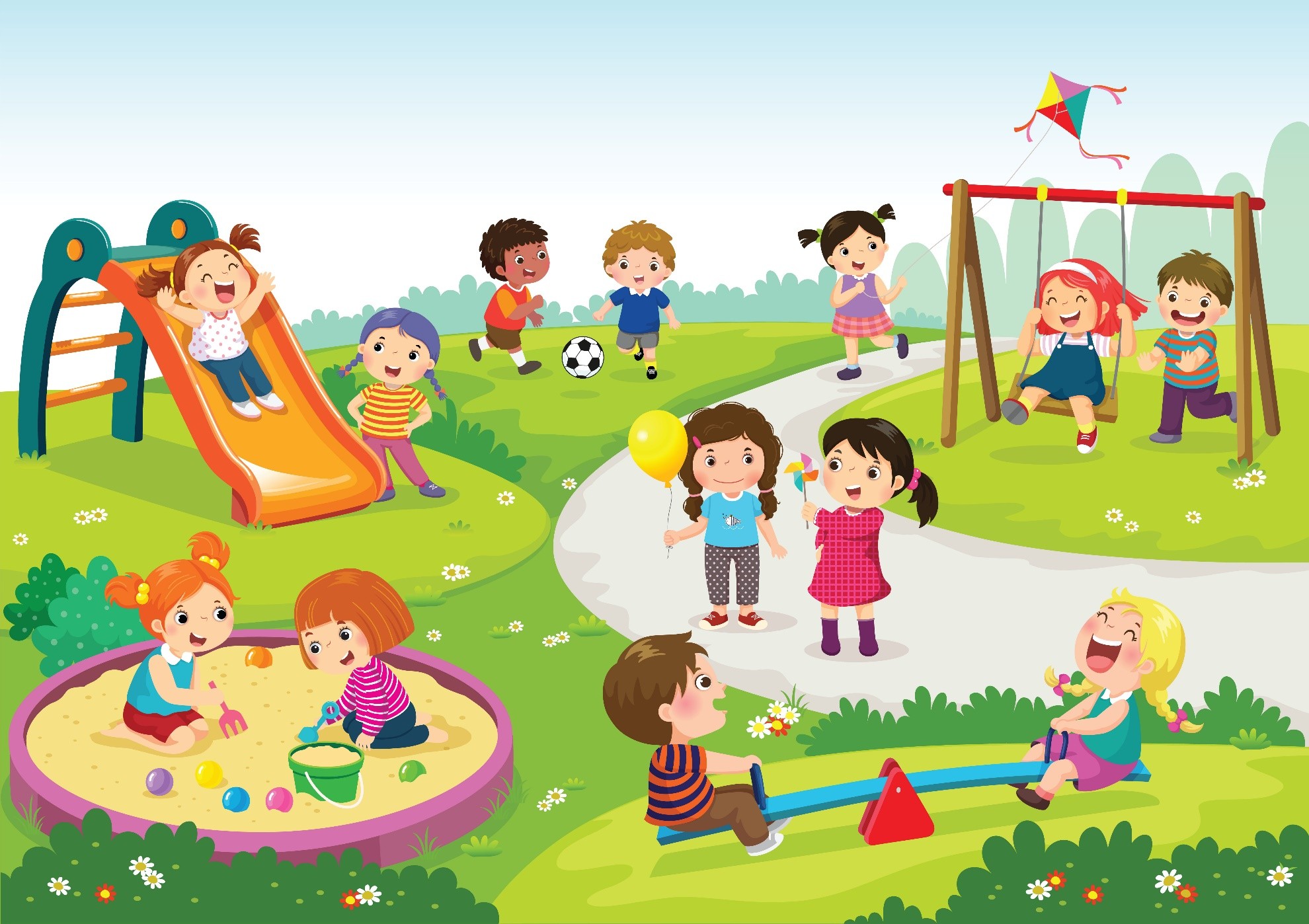
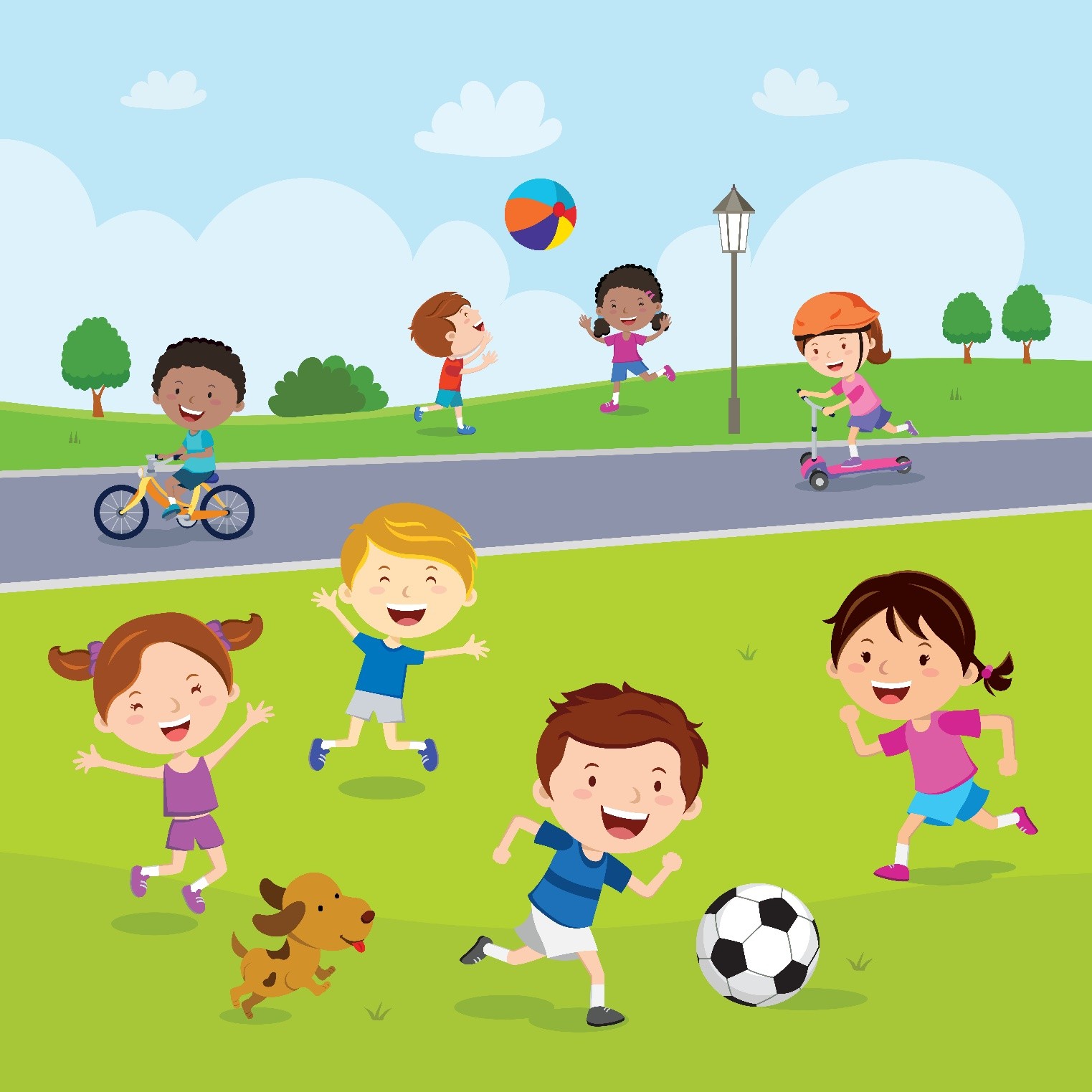
Playground   X
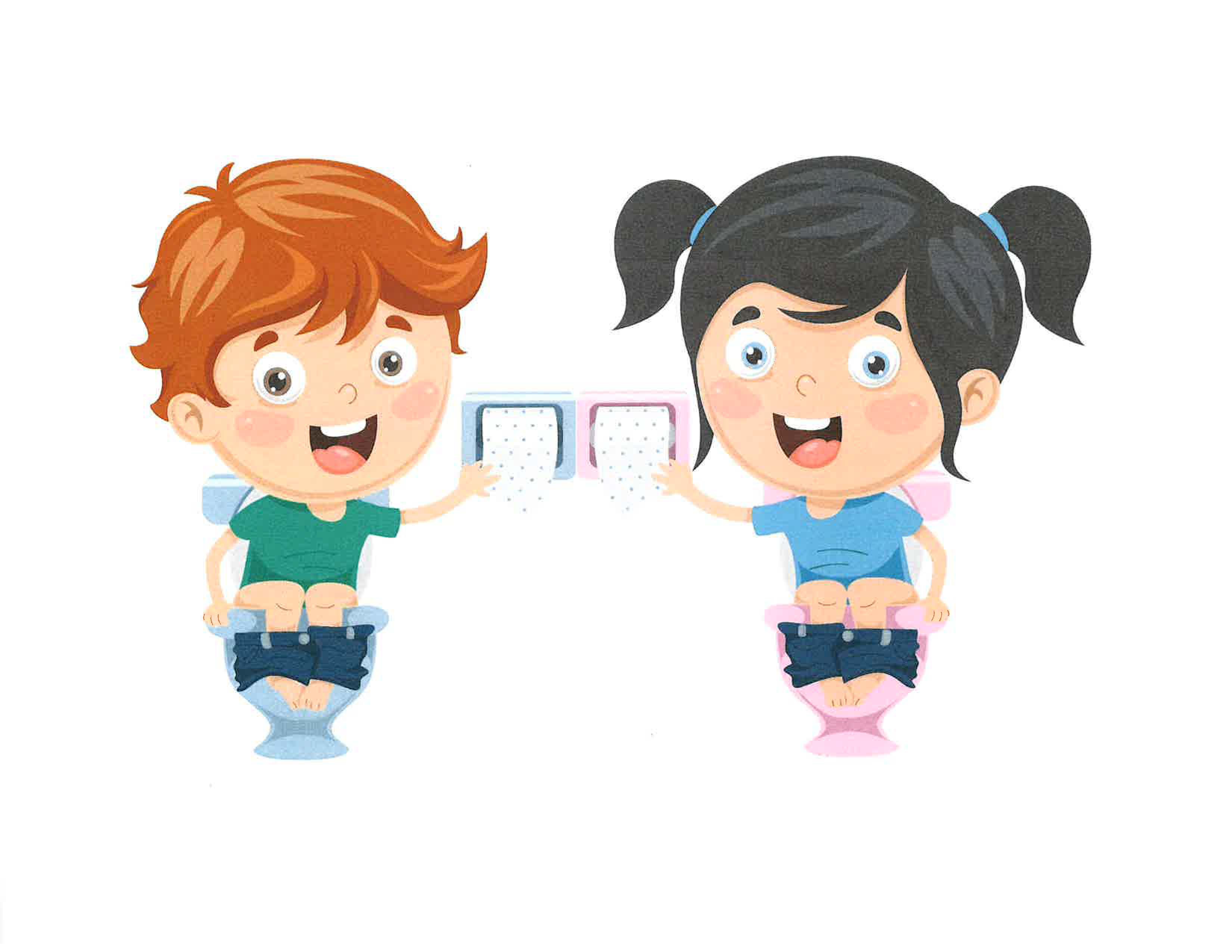
Going to the washroom   X
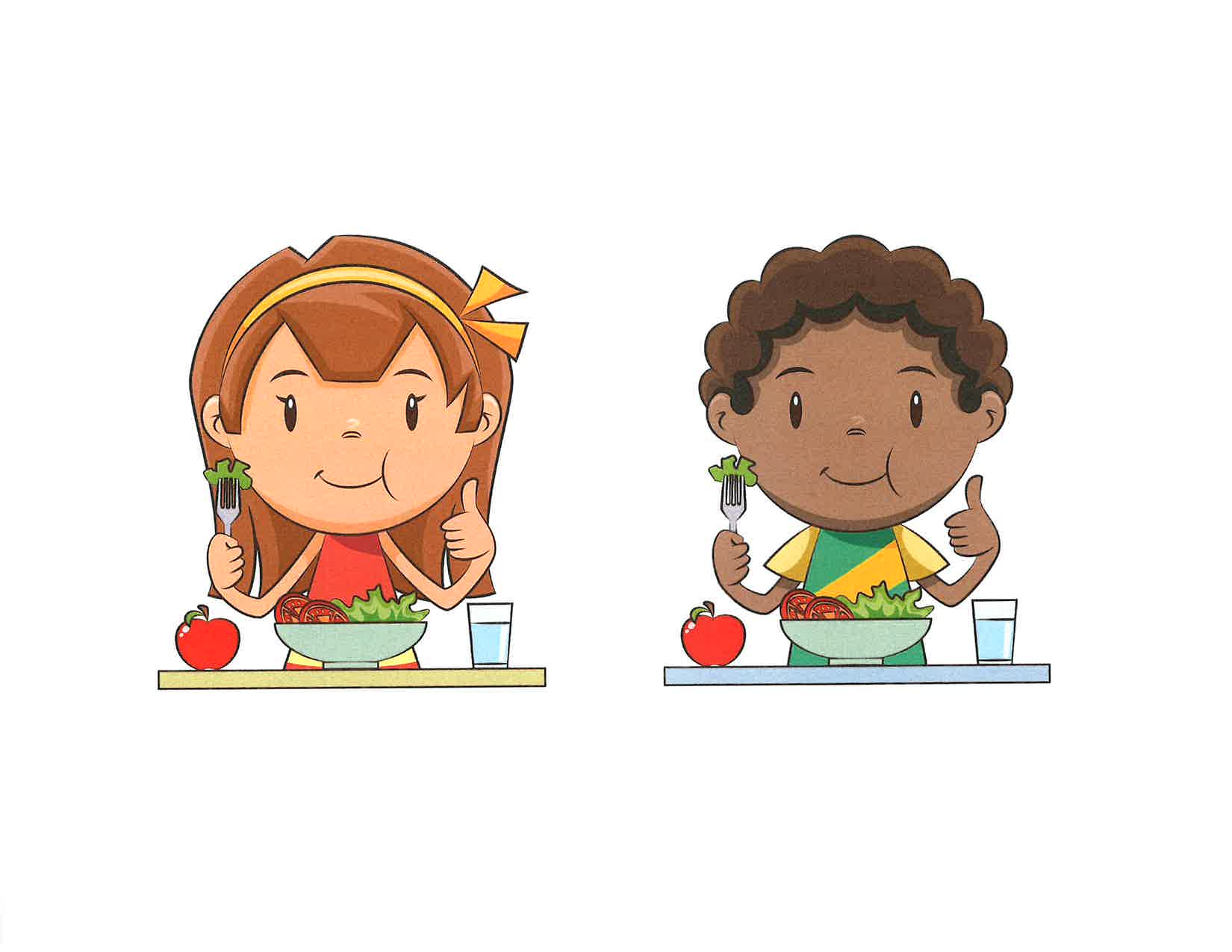
Eating X  
Playing sports   X
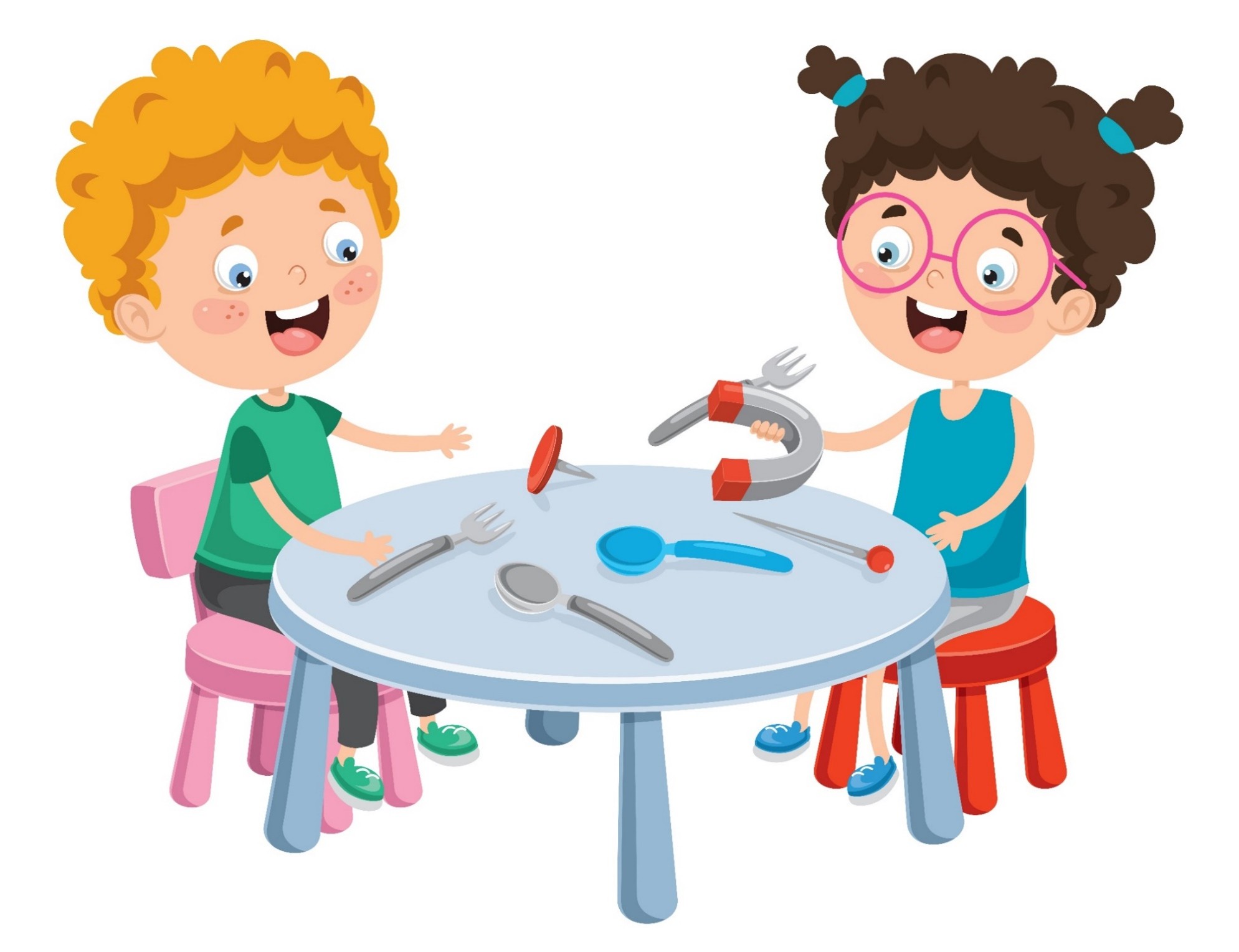
Play table (sensory table) X  
Dirty hands   X
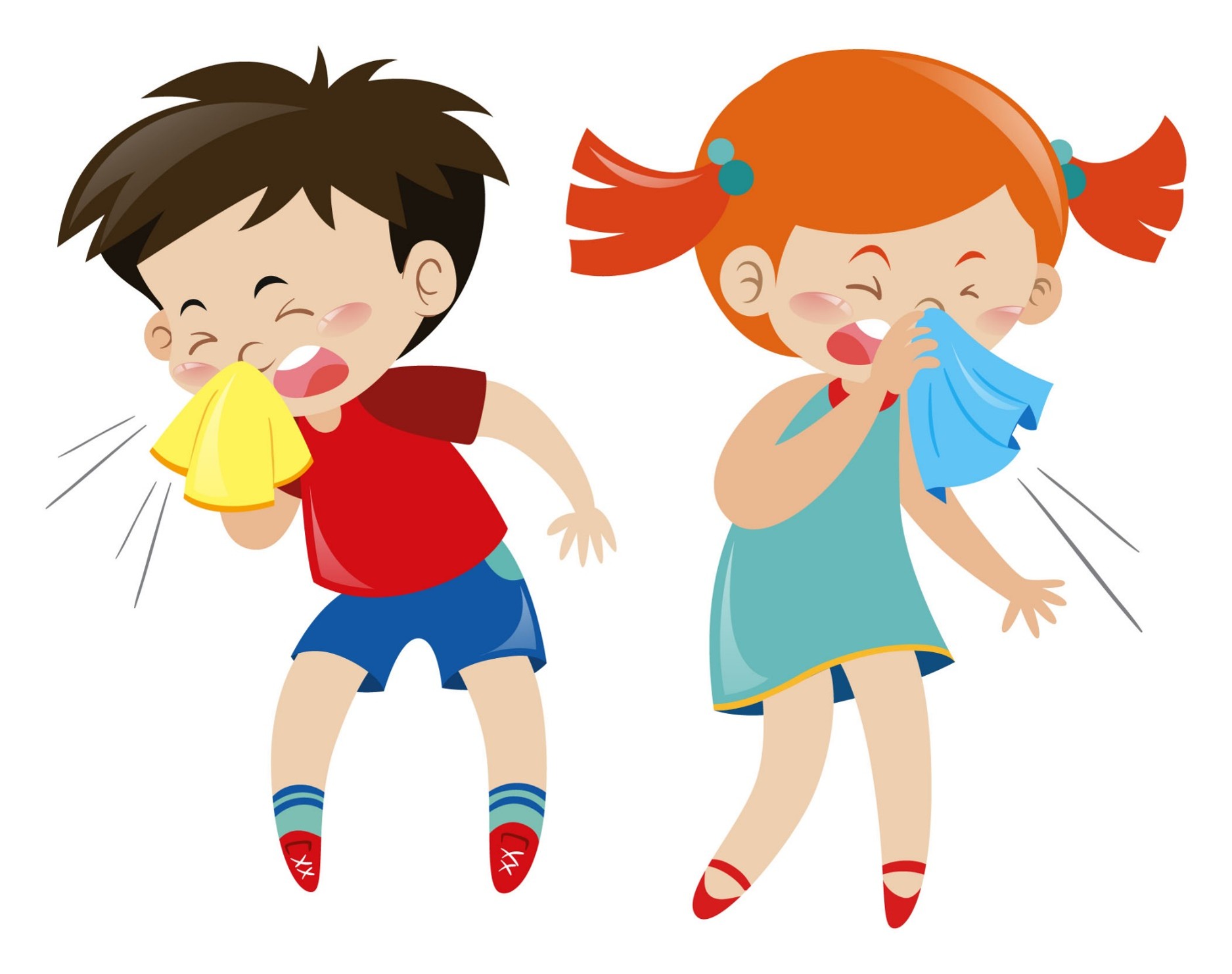
Blowing nose   X

Picture of children washing their hands and the word before


Picture of children washing their hands with the word After

Picture matching for Lesson Plan #8

Lesson Plan #9: How clean are your hands? (Glitter glue)

(Adapted with permission from Ottawa Public Health, 2013)

Learning Objective:

Children will learn how easily germs are spread, and how hand washing can prevent the spread of germs. As part of the learning objective, review the Gratitude Statement.

Materials:

  • Glitter glue
  • Hand washing sink
  • Liquid soap
  • Paper towels

Method:

  1. Ask the children if they have ever heard of germs before. Ask the following probing questions:
    1. Does anyone know what a germ is?
    2. Has anyone ever seen a germ?
    3. What does a germ do to people like me, you and others (e.g., parents, family members, friends, etc.)?
  2. Explain to the class that
    1. Germs are tiny living things that cannot be seen using their eyes, and that they are everywhere.
    2. Germs can make us sick.
    3. Germs can be removed from hands with proper hand-washing techniques using soap and water or hand sanitizer. Review Hand Washing Steps.

Part 1

  1. Place a small amount of glitter glue on the hands of five children.
  2. Ask the children to shake hands/high-five with two of their classmates that do no already have glitter.
  3. Ask the children to raise their hands if they have glitter on them.
  4. Ask how this is similar to how germs spread through hands (glitter represents germs).

Part 2

  1. Ask all children to wash their hands using the proper steps of hand washing.
  2. Ask the children to shake hands/high-five with each other again.
  3. Ask the children to raise their hands if they have glitter on them (no student should have any glitter on their hands).
  4. Ask how hand washing prevents the spread of germs.

Lesson Plan #10: Hand washing songs

20-40 minutes

(Adapted with permission from Ottawa Public Health, 2013)

Learning Objective:

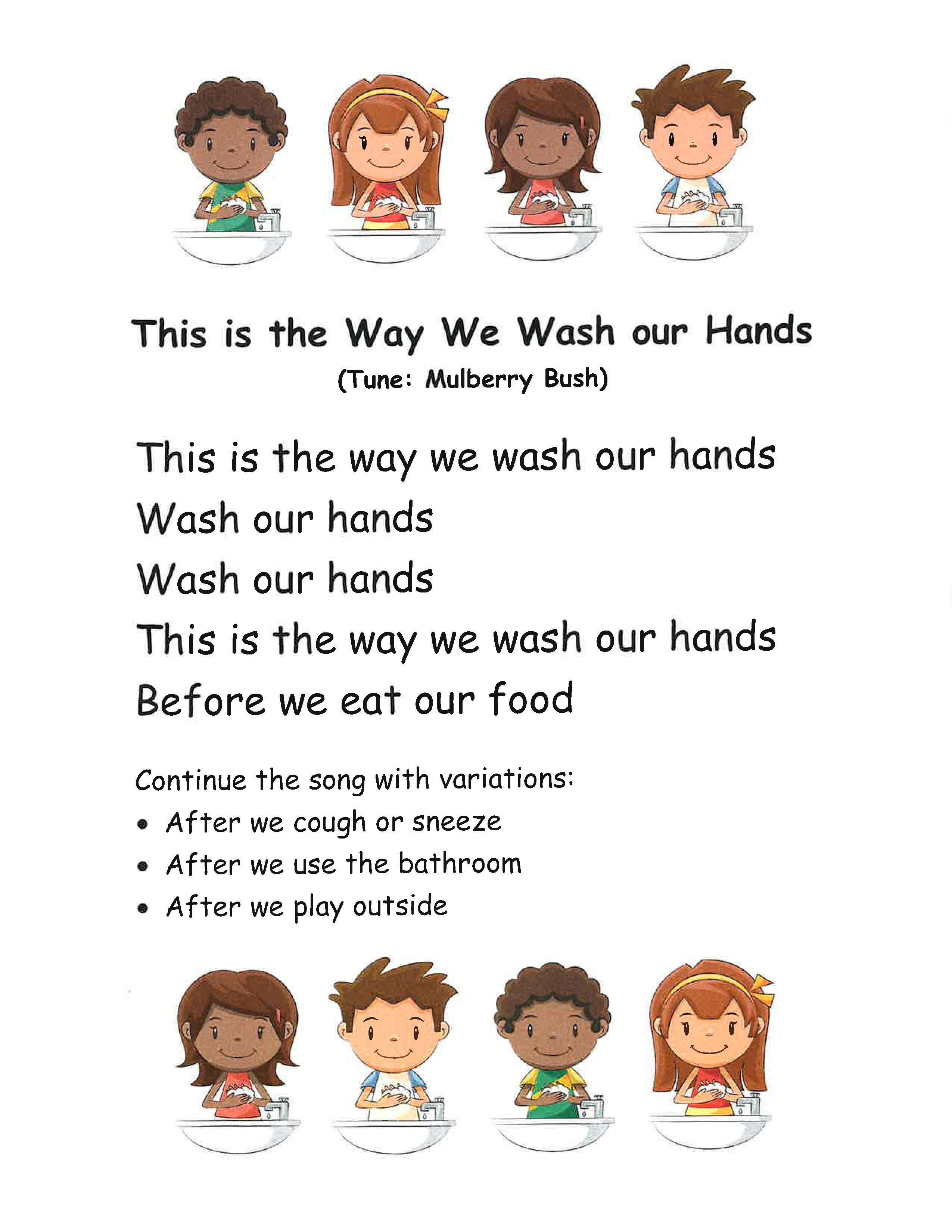
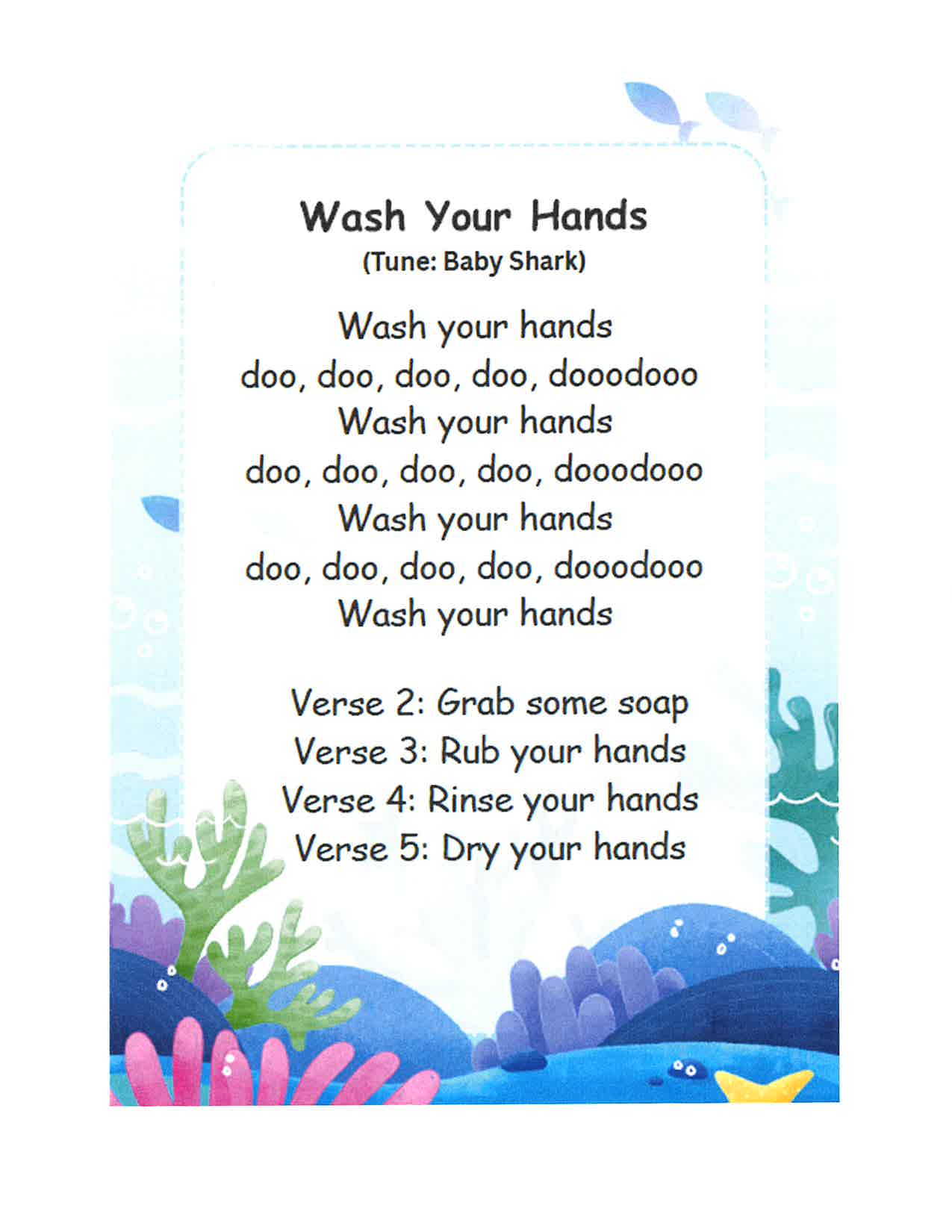
Children will learn songs to help them wash their hands for the proper amount of time (20 seconds). As part of the learning objective, review the Gratitude Statement.

Materials:

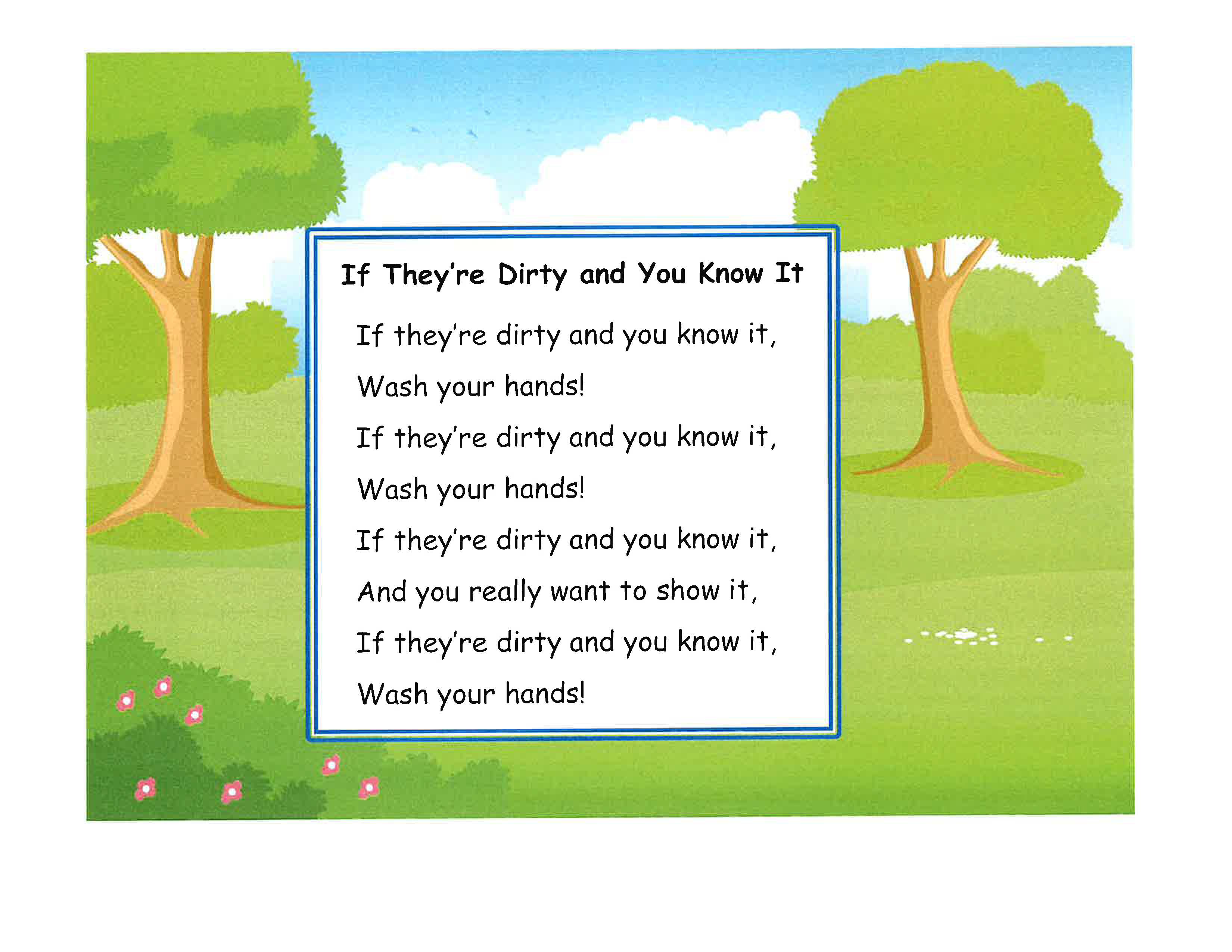
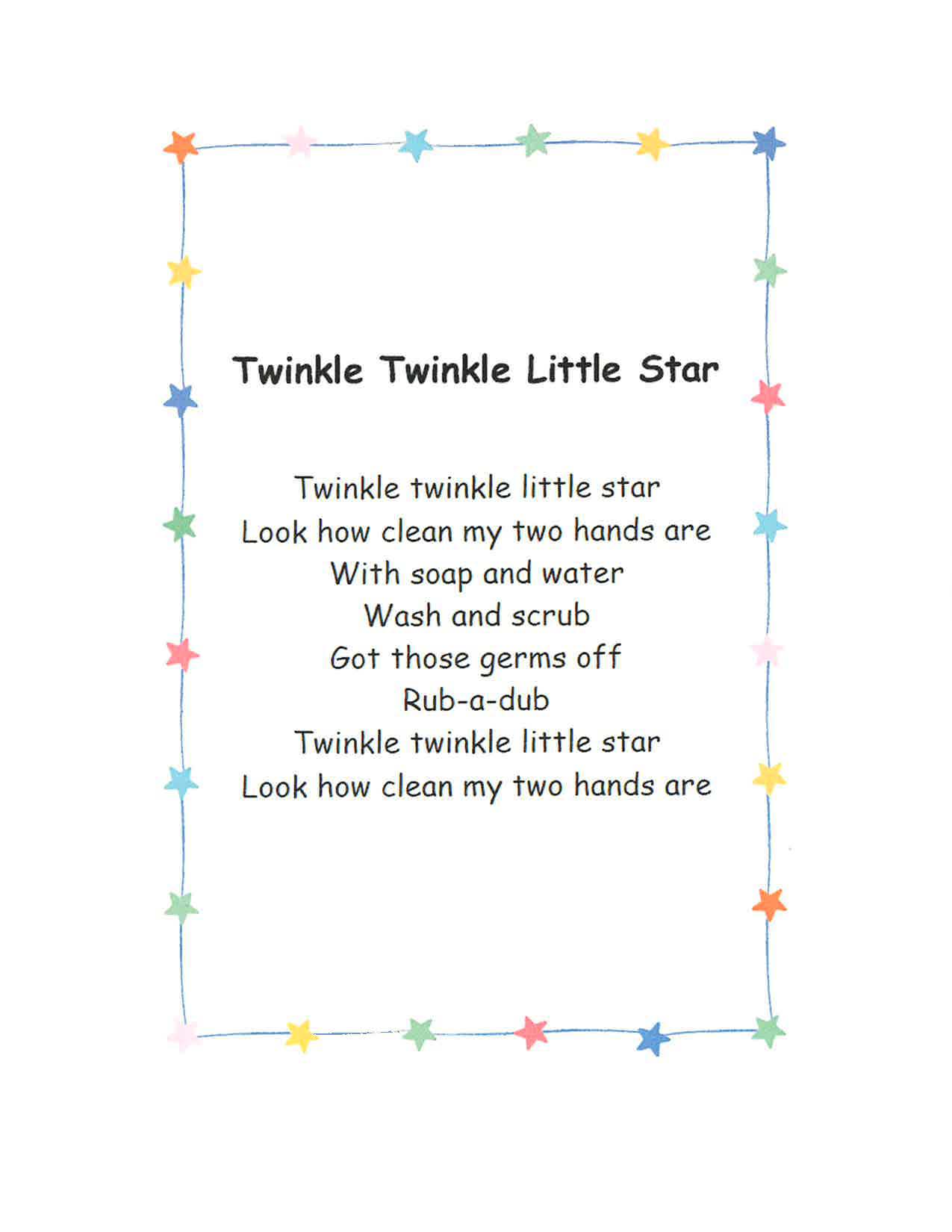
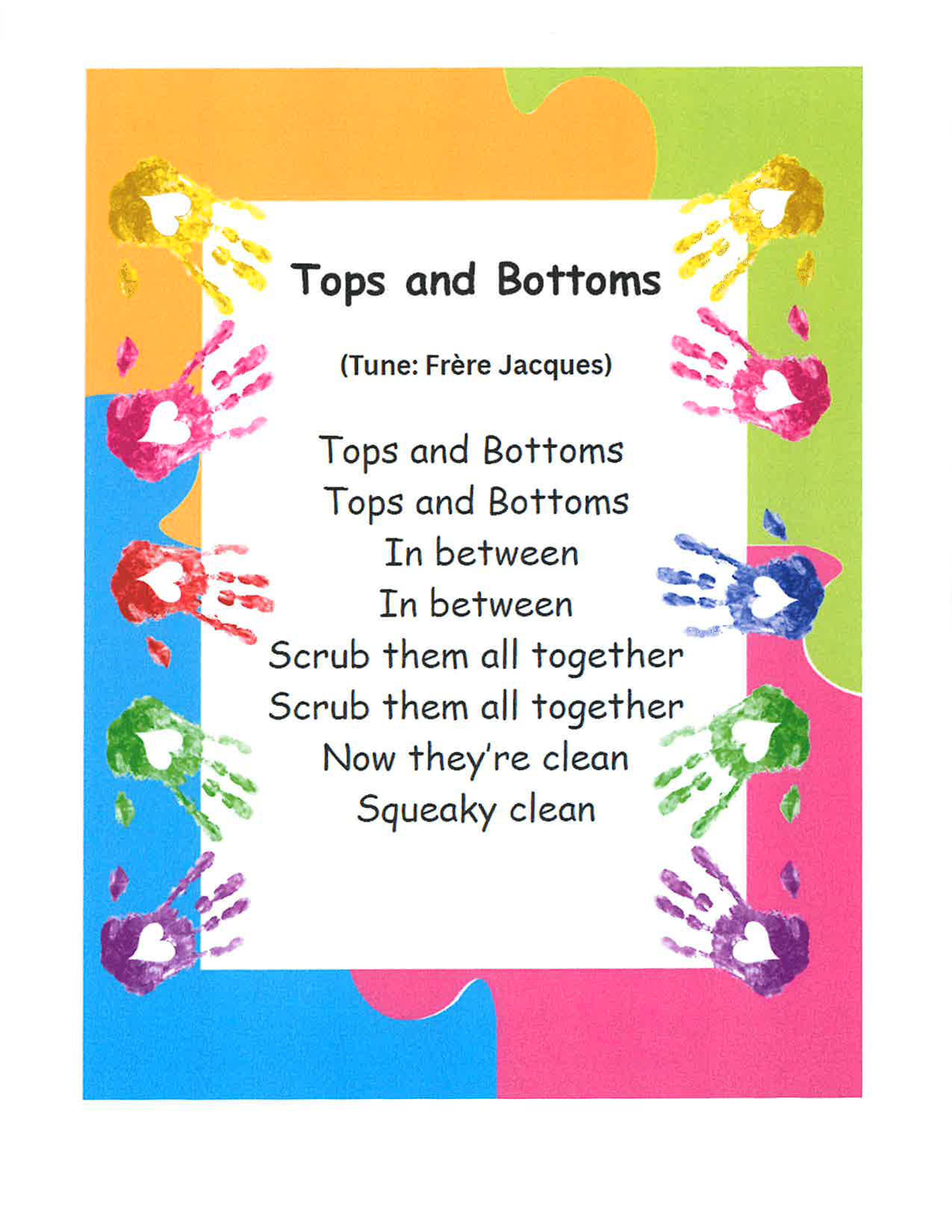
  • One of the songs or chants included on the next pages.

Method:

  1. Ask the children if they have ever heard of germs before. Ask the following probing questions:
    1. Does anyone know what a germ is?
    2. Has anyone ever seen a germ?
    3. What does a germ do to people like me, you and others (e.g., parents, family members, friends, etc.)?
  2. Explain to the class that
    1. Germs are tiny living things that cannot be seen using their eyes, and that they are everywhere.
    2. Germs can make us sick.
    3. Germs can be removed from hands with proper hand-washing techniques using soap and water or hand sanitizer. Review Hand Washing Steps.
  3. Teach and sing the songs or chants listed on the following pages.
  4. While children are simulating hand washing techniques, everyone sings or chants the same tune, for approximately 20 seconds.
  5. To add to the experience for the children, the class can wash their hands in the class sink or take turns in the bathroom. 

Songs for Lesson Plan #10

Lesson Plan #11: Healthy hands mural

15-30 minutes

Learning Objective:

The children will learn how to properly wash their hands. As part of the learning objective, review the Gratitude Statement.
Materials:

  • Poster paper
  • Paint
  • Hand washing sink
  • Liquid Soap
  • Paper towel

Method:

  1. Ask the children if they have ever heard of germs before. Ask the following probing questions:
    1. Does anyone know what a germ is?
    2. Has anyone ever seen a germ?
    3. What does a germ do to people like me, you and others (e.g., parents, family members, friends, etc.)?
  2. Explain to the class that
    1. Germs are tiny living things that cannot be seen using their eyes, and that they are everywhere.
    2. Germs can make us sick.
    3. Germs can be removed from hands with proper hand-washing techniques using soap and water or hand sanitizer. Review Hand Washing Steps.
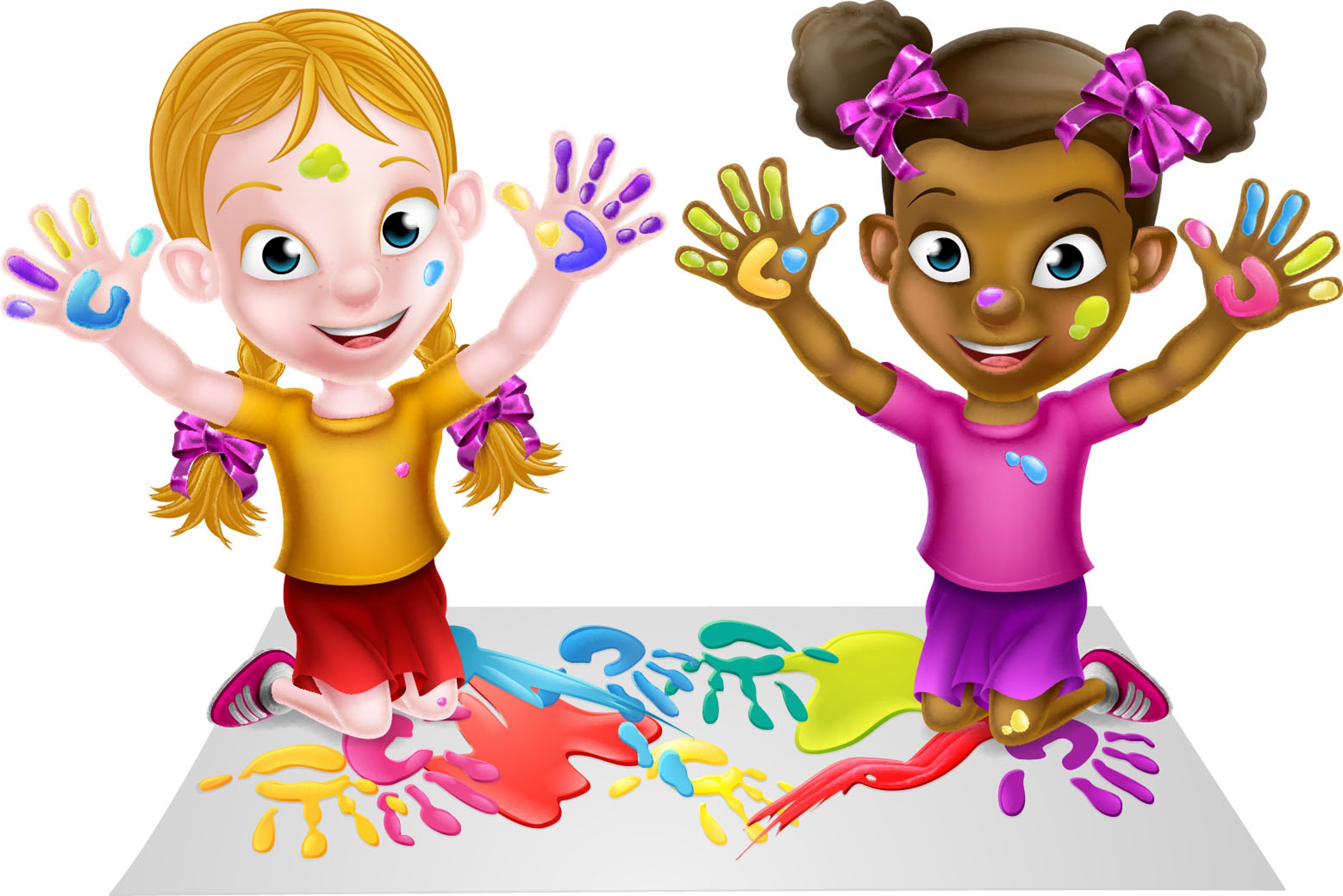
  3. Help children apply paint to their hands, so they can add their handprint to the poster.
  4. Have children wash their hands, using the hand washing steps.
  5. Ask the children about areas on their hands that are sometimes missed during hand washing (i.e. areas where paint remained). These are usually the thumbs, between the fingers, and around the fingernails. Encourage children to pay extra attention to these areas whenever hand washing. Explain that, like germs, the paint can be washed off through proper hand washing.

Contact Us

North Bay Parry Sound District Health Unit

North Bay
345 Oak Street West

Parry Sound
90 Bowes St, 2nd Floor, Suite 201

Phone 705-474-1400
Toll Free 1-800-563-2808
contact@healthunit.ca