

Knowing how to safely pick up and dispose of a sharp helps keep everyone in our community safe, including you, children and pets. Safe disposal also helps prevent the spread of diseases such as HIV and hepatitis.
To support community safety, the Health Unit works with community partners to install community sharps bins, offer free public education on how to safely handle and dispose of a sharp, and provide biohazard containers for clients to safely dispose of used needles and other harm reduction equipment.
If you find a sharp...
Review and follow the steps for safe handling and disposing of a sharp.
You can use a hard-sided container from home (such as a pop bottle or laundry detergent container with a lid), or pick up a free biohazard container from a participating pharmacy.If the sharp is on public property and you are not comfortable handling it, please call your municipality's Public Works department.
Frequently Asked Questions
What is a sharp? |
|||||||||||||||||||||||||||||||||||||||||||||||||||||||
|
A sharp is any object that can puncture or cut someone or something. Examples of sharps include:
|
|||||||||||||||||||||||||||||||||||||||||||||||||||||||
Where can I get supplies to help with safe sharps cleanup? |
|||||||||||||||||||||||||||||||||||||||||||||||||||||||
|
Tongs, disposable gloves, and disinfectant wipes are optional and may be purchased at a local retail store. When picking up a sharp, you will need a hard-sided, puncture-resistant container. You can get a biohazard container at participating pharmacies or use an empty pop bottle or laundry detergent container with a lid instead. Participating pharmacies distribute biohazard containers to:
Please check with each pharmacy about the number of biohazard containers that can be picked up free-of-charge per visit. Other pharmacies in the Nipissing and Parry Sound districts may also offer free biohazard containers.
|
|||||||||||||||||||||||||||||||||||||||||||||||||||||||
How do I pick up a sharp safely? |
|||||||||||||||||||||||||||||||||||||||||||||||||||||||
| 1. Before you begin:
Always assume that blood and body fluids are infectious.
2. Gather and prepare equipment.
3. Pick up the sharp(s) and place it into a hard-sided container.
4. Wash hands and clean equipment
|
|||||||||||||||||||||||||||||||||||||||||||||||||||||||
What safe sharps disposal options are available in the Health Unit region? |
|||||||||||||||||||||||||||||||||||||||||||||||||||||||
Once a sharp has been safely placed in a hard-sided, puncture-proof container (such as biohazard container, a pop bottle, or a laundry detergent bottle with a lid), it can be dropped off at several locations across the Nipissing and Parry Sound districts. These locations include:
|
|||||||||||||||||||||||||||||||||||||||||||||||||||||||
What if I accidentally injure myself with a sharp? |
|||||||||||||||||||||||||||||||||||||||||||||||||||||||
There is a very low risk of blood-borne infections from a sharp injury. The chance of getting HIV or Hepatitis C from a needle stick injury depends on several factors, such as:
Someone who does get injured by a used sharp should:
If the incident happened while working, contact your occupational health department and report the incident accordingly. |
|||||||||||||||||||||||||||||||||||||||||||||||||||||||
Why does the Health Unit work with individuals who use needles? |
|||||||||||||||||||||||||||||||||||||||||||||||||||||||
|
We follow a harm reduction approach. This means we provide clients enough new, sterile needles so they can inject safely. The main goal of this program is to prevent the spread of diseases like HIV and Hepatitis C, and to reduce the risks linked to substance use in the community. We educate all clients how to safely dispose of needles and explain the risks of not doing so. We provide sharps containers and information about where they can dispose of their used supplies. We also encourage clients to return their used equipment directly to our program. |

If you would like more information, or have questions about sharps in the community, please contact us at 1-800-563-2808 x5285 or harm.reduction@healthunit.ca.
Community Safety. That's the Point! Campaign Materials

Posters |
EnglishFrench |
Social Media |
English ImagesFrench Images |
Videos |
EnglishFrench |

Drug-Related Stigma
Some language has become so common that we often don't realize its impact. Learn the four guidelines to non-stigmatizing language and find other ways you, your workplace and community can help reduce the stigma around drug use.
Information for Organizations and Workplaces
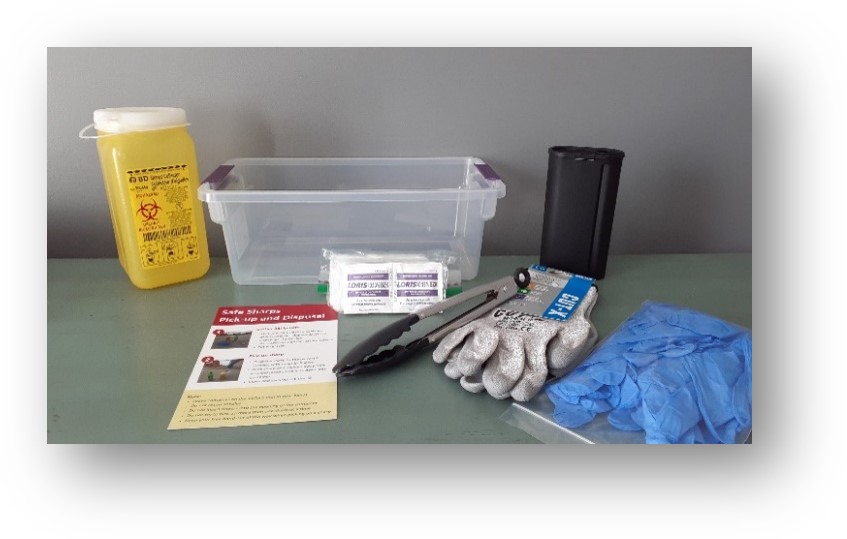
What do I include in a safe sharps handling and disposal kit? |
|
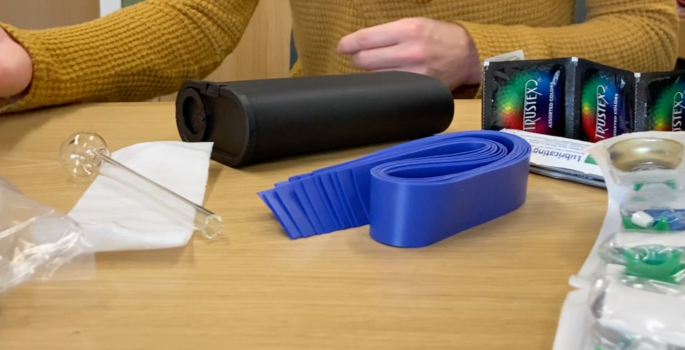
Putting together a safe sharps handling and disposal kit is simple and low-cost The items below are recommended, but you can include whatever is available to you. A kit may include:
|
Purchasing Biohazard Containers |
| Biohazard containers come in a wide range of sizes, styles, and forms. Containers are relatively inexpensive and can be purchased from a number of distributors. For more information on where to purchase or pick-up biohazard containers, please contact harm.reduction@healthunit.ca |
My organization/workplace has sharps containers in their bathrooms. Where can I dispose of the biohazard containers once they are full? |
|
Organizations/workplaces may also connect with one of the following companies to set-up an account for regular disposal services:
|
Where can I get training for my staff? |
|
Training is available by the Health Unit at no cost. Contact harm.reduction@healthunit.ca to schedule a Safe Sharps Handling and Disposal training. |


For additional information, or questions about sharps in the community, please contact us at 1-800-563-2808 x5285 or harm.reduction@healthunit.ca.